Some links below are affiliate links. If you buy through them we may earn a small commission at no cost to you.
The best brush pens for coloring (or colouring, if you spell it the UK way) are water-based pens with a flexible tip, and the safest first buy is a set of Tombow Dual Brush Pens. They blend with water or a blender pen, they behave on printed pages, and the fine tip on the other end handles the small spaces.
Below are ten brush pens that come up again and again in coloring, drawing and lettering guides, with what each one is good at, where it lets you down, and the paper that keeps ink from soaking through to the next page.
For coloring books and printed pages, start with Tombow Dual Brush Pens. Sakura Koi Coloring Brush Pens are the easier pick if you want soft blends with a colorless blender. Ohuhu water-based sets are the budget way to get a big color range. For a watercolor look, use Ecoline or Arteza Real Brush Pens. Copic Sketch markers blend best of all, but they are alcohol-based, so use them only on heavy paper, one side printed.
Quick comparison
| Brush pen | Ink | Tip | Best for | Watch out for |
|---|---|---|---|---|
| Tombow Dual Brush Pens | Water-based | Fiber brush plus fine tip | Coloring and lettering in one set | Shows through thin printer paper |
| Sakura Koi Coloring Brush Pens | Water-based dye | Flexible brush, single tip | Soft blends in adult coloring books | No fine tip for tiny spaces |
| Ohuhu water-based brush markers | Water-based | Brush plus fine tip | Big color range on a budget | Ohuhu also sells alcohol sets, so read the box |
| Arteza Real Brush Pens | Water-based | Nylon bristle brush | Watercolor-style washes | Bristles splay if you scrub |
| Ecoline Brush Pens | Liquid watercolor (dye) | Flexible brush | Bright, juicy color and wet blending | Not lightfast, so keep finished pages out of sun |
| Karin Brushmarker PRO | Water-based, high pigment | Flexible brush | Stepping up from a starter set | Harder to find in stores |
| Faber-Castell Pitt Artist Pen Brush | Pigment India ink | Firm brush | Detailed coloring and drawing that lasts | Permanent once dry, so hard to blend |
| Copic Sketch | Alcohol-based dye | Super Brush plus chisel | Smooth, streak-free blending | Bleeds through most coloring book paper |
| Pentel Fude Touch Sign Pen | Water-based | Small, springy felt brush | Lettering beginners, small details | Too small for filling big areas |
| Pentel Pocket Brush Pen | Black ink cartridge | Synthetic bristle brush | Inking drawings with thick and thin lines | Black or sepia ink only, takes practice |
What makes a brush pen good for coloring?
Four things matter more than the brand name.

Ink. Water-based ink is the default for coloring books. It is gentle on paper, it reactivates with water so you can soften edges, and it rarely goes straight through a decent page. Alcohol ink blends more smoothly but sinks into paper and bleeds through anything thin. Pigment ink, like the India ink in Pitt pens, stays put once dry, which is great for line work and annoying for blending.
Tip. Most brush pens use one of two tip types. A fiber tip (sometimes called felt) is a bundle of fibers pressed into a brush shape. It is firm, springs back and survives a lot of pressure. A bristle tip, the kind sold as “real brush”, has separate synthetic hairs like a paintbrush. It gives longer, more painterly strokes, but it splays if you press hard or scrub at a big area. For coloring pages, a fiber tip is easier to control. For washes and lettering flourishes, bristles feel more like paint.
A second tip. Dual-tip pens put a fine or bullet tip on the other end. On busy adult pages, that fine end is what gets you into the gaps between petals without going over the line.
Set size. More colors is not always better. A set of 24 to 36 covers most pages, and you can add singles later. Big 100-color boxes look great on a shelf, but pens you never reach for still dry out.
Water-based vs alcohol brush pens
| Water-based | Alcohol-based | |
|---|---|---|
| Bleed-through | Light, often just a faint shadow on the back | Goes through most printer and coloring book paper |
| Blending | With a blender pen or a damp water brush | Wet into wet, very smooth |
| Streaks | Can streak on large areas | Few streaks if you keep the edge wet |
| Smell | Little to none | Noticeable, use in a ventilated room |
| Paper it wants | Most coloring pages, 32 lb and up is better | Heavy cardstock or marker paper, one side printed |
| Kids | The usual choice | Better kept for older kids and adults |
If most of your coloring happens in printed books, go water-based. If you print your own pages on cardstock and want smooth skin tones and skies, alcohol is worth it. We go deeper on the trade-offs in alcohol markers vs water-based.
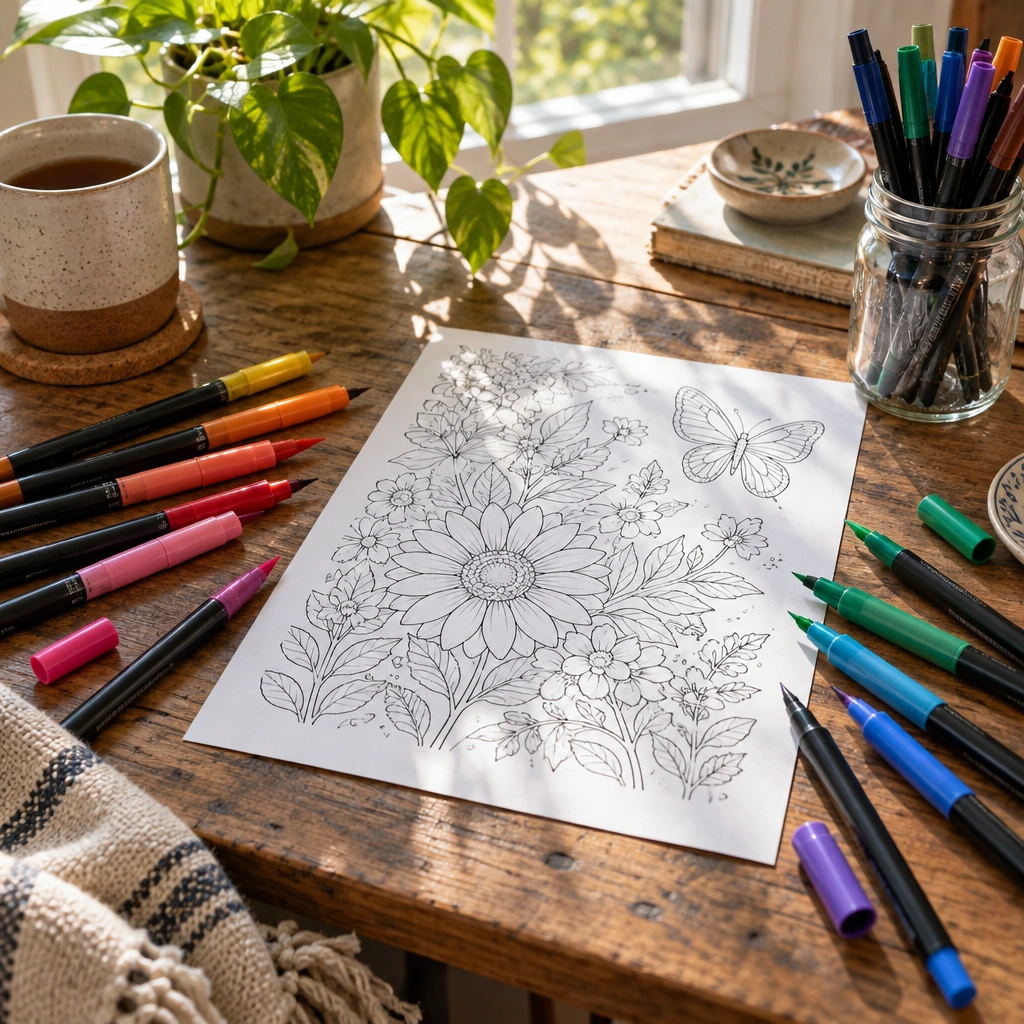
The best brush pens for coloring
Water-based pens first, then pigment and alcohol, then the two pens that are really for lettering and drawing.
Tombow Dual Brush Pens
The pen most coloring and lettering guides land on first, and for good reason. Each pen has a flexible fiber brush on one end and a fine bullet tip on the other, and the water-based ink blends with Tombow’s colorless blender or a damp brush. Tombow lists more than 100 colors, from pastels to deep darks, and sells them in small themed sets as well as singles, so you can build a palette slowly.
Best for: one set that handles coloring books, cards and lettering practice.
Watch out for: on thin printer paper the ink can show through, and big flat areas can streak if you go back over half-dry ink.
Skip it if: you mostly fill large backgrounds and want the cheapest color per dollar.
Sakura Koi Coloring Brush Pens
Sakura made these with coloring in mind. The single flexible brush tip lays down a smooth line, the water-based dye ink blends easily, and Sakura sells a colorless blender pen that pulls color out into soft gradients. Sets run from small packs of six to 48 colors.
Best for: adult coloring pages where you want soft shading on leaves, petals and feathers.
Watch out for: there is no fine tip, so tiny spaces take a light touch with the point of the brush.
Skip it if: you color dense mandalas with lots of tiny cells. Pair them with a fineliner instead.
Ohuhu water-based brush markers
The budget route to a big palette. Ohuhu’s water-based sets put a brush tip on one end and a fine tip on the other, and they come in large boxes that suit anyone still working out which colors they use. One catch: Ohuhu also makes alcohol-based markers with brush tips, and the boxes look alike. For coloring books, make sure the box says water-based.
Best for: tweens, beginners and anyone who wants lots of colors without spending much. Our list of art supplies for tweens covers what else goes in a starter kit.
Watch out for: big boxes include colors you may never use, and pens that sit unused dry out.
Skip it if: you only want 12 good colors that last.
Arteza Real Brush Pens
These have a nylon bristle tip, closer to a small paintbrush than a marker. Lay color down, then pull it out with the water brush that comes in the set, and you get a watercolor-style wash without getting out paints. They are popular for botanical pages and soft backgrounds.
Best for: watercolor effects on flower and nature pages.
Watch out for: bristles splay and fray if you press hard or scrub at a big area. Use the side of the brush and light pressure.
Skip it if: a younger child will be using them. A fiber tip survives heavy hands much better.
Ecoline Brush Pens
Royal Talens fills these with Ecoline liquid watercolor, the same dye-based color sold in bottles, so the color is bright and wet-looking. The ink stays rewettable after it dries, which means you can come back with a damp brush and soften or move color. Royal Talens lists 60 colors.
Best for: bold, juicy color and blending with water on heavier paper.
Watch out for: dye ink like this is not lightfast. Pages you frame and hang in a sunny spot will fade over time, so keep finished work in a folder or out of direct light. The wet ink also needs good paper or it buckles.
Skip it if: you color on thin printer paper.
Karin Brushmarker PRO
A water-based brush marker with strong, saturated color and a flexible tip, priced between the budget sets and the artist brands. It is often suggested as the next step for people who started with a cheap set and want richer color that still blends with water.
Best for: upgrading from a starter set without moving to alcohol.
Watch out for: fewer stores stock it, so replacing single colors can take some hunting online.
Skip it if: you are still deciding whether you like brush pens at all.
Faber-Castell Pitt Artist Pen Brush
Pitt brush pens use pigment India ink that is permanent once dry, and Faber-Castell offers them in 60 colors. The brush is on the firm side, which makes it easy to control on detailed pages. Because the ink stays put, you can draw lines with it and then color over them with markers or watercolor without smearing.
Best for: detailed adult coloring, art journals and drawings you want to keep.
Watch out for: permanent ink is hard to blend. Work in layers of light color rather than trying to smooth an edge after it dries.
Skip it if: soft blends with water are the whole point for you.
Copic Sketch
The marker most often named for smooth blending. Each Copic Sketch has a flexible Super Brush nib on one end and a medium chisel on the other. Copic lists 358 colors, and the pens can be refilled with Copic ink, so one pen lasts a long time.
Best for: adults coloring on cardstock or marker paper who want smooth skin tones, skies and shading. If alcohol markers are new to you, our guide to the best alcohol markers for beginners covers cheaper ways in.
Watch out for: alcohol ink bleeds through thin paper and through most coloring book pages. They cost a lot per pen, and the ink is flammable and has a smell.
Skip it if: you color in double-sided books or are buying for young kids.
Pentel Fude Touch Sign Pen
A small, springy felt brush tip with water-based ink. It bends just enough to give thick and thin strokes and snaps back straight, which is why so many people learn brush lettering on it. It also handles small details on coloring pages that a big brush would flood.
Best for: first-time brush lettering, journal headers and outlining.
Watch out for: the tip is small, so filling a big area takes forever, and the color range is much smaller than the coloring sets.
Skip it if: you want a pen for filling whole pages.
Pentel Pocket Brush Pen
A refillable pen with real synthetic bristles and black ink cartridges, and the one comic and sketchbook artists bring up most for inking. Light pressure gives a hairline, more pressure gives a bold stroke, all from one tip.
Best for: drawing and inking line art with thick and thin lines.
Watch out for: bristles take practice to control, and it takes black or sepia ink, not colors. Let the ink dry fully before you color over it.
Skip it if: you want color. This one is for lines.


Best brush pens for drawing
For drawing, the question is whether the ink stays put. If you plan to color over your lines with markers or a water brush, use pigment ink that is permanent once dry, like the Faber-Castell Pitt Artist Pen Brush. For bold, expressive inking, the Pentel Pocket Brush Pen gives the most line variation from a single tip. For sketching in color, Tombow Dual Brush Pens work well because the fine tip handles detail and the brush end handles shading.
Brush pens reward a loose hand. A few minutes of drawing warm-ups on scrap paper, plus some of the step-by-step drawing tutorials in our library, teach you how much pressure gives which line faster than any pen review.
Best brush pens for lettering
Brush lettering is thin upstrokes and thick downstrokes, so you want a tip that flexes and springs back. Beginners usually find a small, firm tip easier. The Pentel Fude Touch Sign Pen and the Tombow Fudenosuke are the two most common starting pens, and the Fudenosuke comes in a hard tip and a soft tip version. Once your strokes are steady, the larger brush end of a Tombow Dual Brush Pen gives bigger, bolder letters, and the Kuretake ZIG Clean Color Real Brush suits a softer, painted look.
Paper matters more for lettering than for coloring. Rough paper chews up brush tips quickly. Smooth paper, like laser printer paper or a smooth marker pad, keeps the tip sharp for much longer.
How to blend brush pens without streaks
Most people buy brush pens to blend, and most first attempts look streaky. These are the methods that work with water-based pens:
- Blender pen: color the dark part, then go over the edge with a colorless blender (Tombow and Sakura Koi both sell one) to pull color into the light area. Clean the blender tip on scrap paper afterwards.
- Water brush: lay down color, then pull it out with a barely damp water brush. Too much water buckles thin paper and lifts fibers, so blot the brush first.
- Palette method: scribble color onto a smooth plastic surface, like a zip bag, and pick it up with a water brush. It works like a tiny watercolor palette and is good for light washes.
- Tip to tip: touch a dark pen to the brush of a lighter one, then color with the light pen. You get a gradient in one stroke. Scribble on scrap paper afterwards until the light pen runs clean.
For big areas like skies and backgrounds, work in small sections, keep the edge wet, and don’t go back over ink that has started to dry. That last part causes most streaks.
Do brush pens bleed through coloring books?
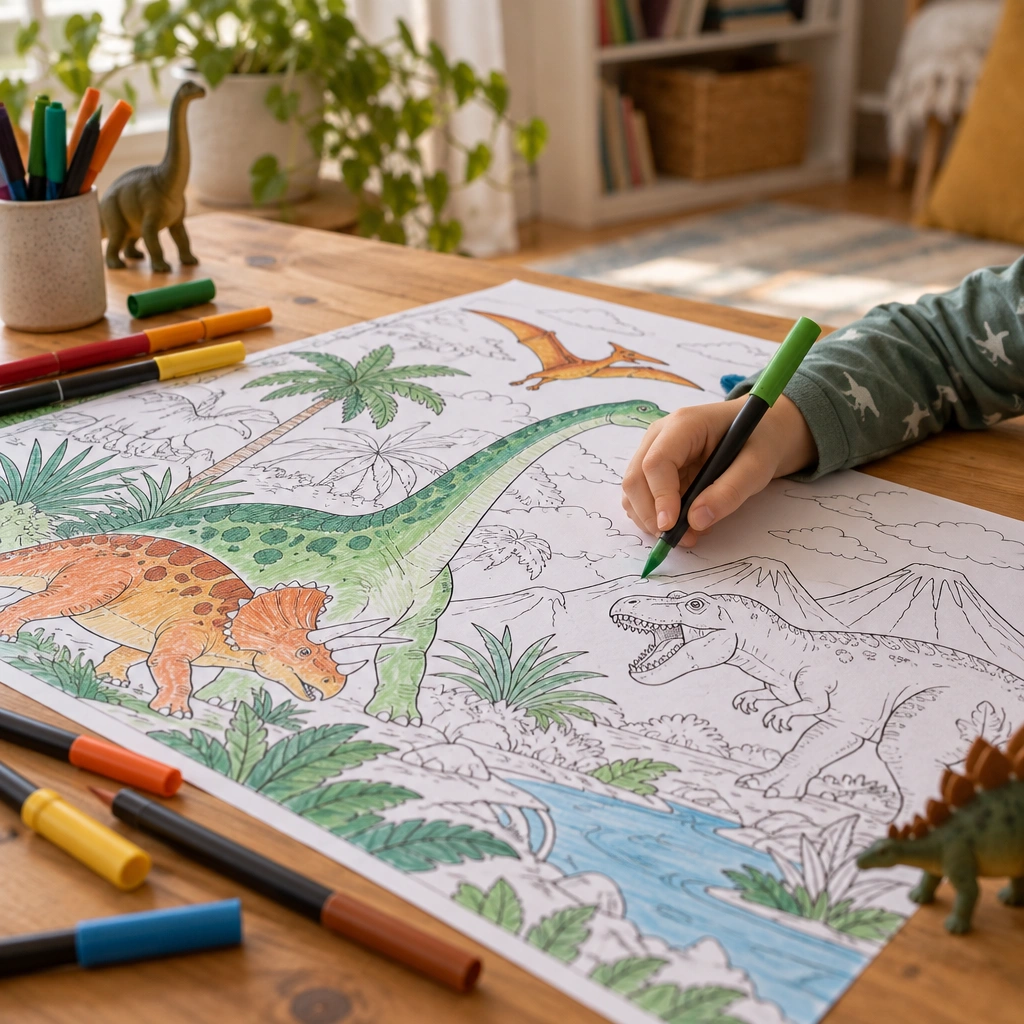
Water-based brush pens usually leave a faint shadow on the back of a coloring book page, sometimes nothing at all. Alcohol pens go straight through most of them. Three habits fix most problems:
- Slip a scrap sheet behind the page you are coloring.
- Use single-sided pages. In a double-sided book, the shadow lands on the next picture. We explain why in our piece on single-sided coloring books.
- Print your own pages on heavier paper. 32 lb paper handles water-based brush pens well, and cardstock is the safe bet for alcohol. The best paper for coloring books guide has a full weight chart.
Our printed books are single-sided, so they suit marker work:
- The Big Book of Coloring, a coil-bound collection of 78 pictures, gives you plenty of styles to try a new set on.
- The Ocean Coloring Book and Dinosaur Coloring Book have large, simple shapes for blending.
- The Botanical Gardens book suits detailed leaves and petals.
To try a new set first, print a few of our free flower coloring pages or free mandala coloring pages, or browse the full library of free printable coloring pages.
Brush pens for kids
Young kids press hard, so a soft bristle tip won’t last long. Look for a firm fiber brush tip and washable ink, and check the age grading on the package. Tombow and Koi are fine for older kids who color carefully. For little ones, a washable marker with a chunky tip is a better first step, and our guide to the best washable markers for toddlers covers those. An art smock for kids helps when ink and small hands share a table.
How to make brush pens last
- Cap them tightly. An open brush tip dries out faster than a regular marker.
- Store dual-tip pens flat so ink stays spread between both ends.
- Color with light pressure. The tip does the work, and pressing hard frays it.
- Clean a muddy tip by scribbling on scrap paper until the color runs clear.
- Keep rough paper for crayons and pencils. It wears brush tips down fast.
Good light helps you see blends and streaks before they dry, so our guide to the best lamp for coloring is worth a look if you color in the evening.
How we chose
We went through what the makers say about each pen (ink type, tip style, color range, refills and safety labeling) and looked at which pens come up most often in coloring, drawing and lettering guides and in community discussions. We did not test these pens ourselves, so treat the notes above as a summary of the makers’ information and what users and reviewers commonly report. For anything a child will use, read the age grading on the package and look for the AP seal from ACMI, which marks art materials reviewed for safety.
Still shopping for a gift? Our non-toy gifts for kids guide has more ideas, and the full shop has printed and printable books.
Frequently asked questions
Are brush pens good for coloring?
Yes. Water-based brush pens are one of the nicest ways to color printed pages. The flexible tip fills big areas in a few strokes and comes to a point for small spaces, and the ink can be blended with water or a blender pen. Use single-sided pages or a scrap sheet behind the page to stop show-through.
What are the best brush pens for coloring books?
Tombow Dual Brush Pens and Sakura Koi Coloring Brush Pens are the two most often recommended, because they are water-based, blend easily and rarely bleed through a decent page. Ohuhu water-based sets are a cheaper way to get many colors. Avoid alcohol brush markers in double-sided books.
Are brush pens the same as markers?
A brush pen is a kind of marker with a flexible, pointed tip. Press lightly and you get a thin line, press harder and the line gets thick. A standard marker has a firm tip that makes the same line whatever the pressure. Many brush pens add a fine tip on the other end.
Do brush pens bleed through paper?
Water-based brush pens may leave a faint shadow on thin paper but rarely soak through a coloring book page. Alcohol-based brush pens bleed through most printer and coloring book paper, so use them on cardstock or marker paper, printed on one side, with a scrap sheet behind it.
What is the difference between fiber tip and real brush pens?
A fiber tip is a bundle of fibers pressed into a brush shape. It is firm, springs back and handles pressure, which makes it easier for coloring and for beginners. A real brush tip has separate synthetic bristles, gives more painterly strokes and washes, but splays and frays if you press hard.
How do you blend brush pens?
Color the darker area, then pull the edge out with a colorless blender pen or a barely damp water brush. You can also touch a dark pen to a lighter pen’s tip and color with the lighter one for a gradient in one stroke. Work in small sections and don’t go back over half-dry ink.
What are the best brush pens for beginners?
For coloring, Tombow Dual Brush Pens or a water-based Ohuhu set. For lettering, a small firm tip like the Pentel Fude Touch Sign Pen or the Tombow Fudenosuke is easier to control than a big soft brush. Start with a small set and add colors once you know what you reach for.
Can kids use brush pens?
Older kids who color carefully do well with water-based pens like Tombow or Koi. Younger kids tend to press hard and crush soft tips, so a washable marker with a chunky tip is a better start. Check the age grading on the package and look for the AP seal from ACMI.
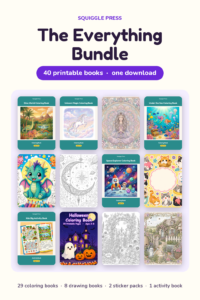
Every Squiggle Press book: 40 printable PDFs for $9.99
Kids coloring books, adult coloring books, drawing tutorials & sticker packs. Over $150 if bought separately. Print unlimited copies forever.
Get the bundle →