Some links below are affiliate links. If you buy through them we may earn a small commission at no cost to you.
If you’ve ever peeled a toddler off a freshly “decorated” wall, you already know why this matters. Finding the best crayons for toddlers isn’t about fancy packaging or a huge color count — it’s about safety, grip, and washability, in that order. Toddlers ages 1-3 are still building the hand strength and fine motor control to hold anything thin, and they will, at some point, taste a crayon. So today we’re breaking down exactly what to look for, our favorite picks, and a few tricks to keep the fun on the paper (mostly).

The best crayons for toddlers are chunky, triangular or jumbo-barreled, non-toxic, and labeled washable, since toddler hands are still developing the grip strength for thin standard crayons. Look for brands like Crayola Ultra-Clean Washable, Honeysticks (beeswax), or jumbo triangular sets, and always check for an ASTM D-4236 safety label before buying.
The short answer
The best crayons for toddlers are chunky or triangular-barreled, non-toxic, and clearly labeled washable so they wipe off skin, walls, and most fabrics. Thicker barrels (like jumbo or triangular shapes) are easier for small, still-developing hands to grip than standard pencil-thin crayons. Beeswax or soy-based crayons are a nice option for toddlers who still mouth things, since they’re generally made with simpler, food-grade ingredients than petroleum-wax crayons.
Why regular crayons don’t always work for toddlers
Standard crayons are designed for a mature pincer grip — the same grip used to hold a pencil. Most toddlers under age 3 haven’t developed that grip yet; they’re still using a whole-fist “palmar grasp.” A thin crayon slips right out of a fist grip, which leads to frustration, snapped crayons, and crayons flung across the room. The best crayons for toddlers solve this with wider barrels that fill the whole hand, giving toddlers more control with far less effort.
According to the American Academy of Pediatrics, toddlers’ fine motor skills develop gradually through repeated practice with age-appropriate tools — which is exactly why the right crayon shape matters more at this age than it will later.
What to look for in the best crayons for toddlers
Before you toss a box in your cart, run through this quick checklist. A few seconds of label-reading now saves a lot of cleanup later.

- Non-toxic certification: Look for the ASTM D-4236 label or “AP” (Approved Product) seal from the Art and Creative Materials Institute.
- Washable formula: Specifically labeled “washable” — not all crayons are, especially specialty or metallic ones.
- Chunky or triangular shape: Wider barrels are easier for small fists to hold and harder to snap.
- Large enough to be a choking hazard deterrent: Jumbo crayons are too big to swallow whole, which matters for kids who still mouth objects.
- Simple ingredient list: Beeswax or soy-wax crayons are a gentler option if your toddler is a frequent taste-tester.
- Small set size: 8-12 colors is plenty for a toddler; huge 64-count sets just overwhelm and get lost.
Our favorite best crayons for toddlers, by type
There’s no single “best” crayon for every family — it depends on your toddler’s grip, your walls, and your laundry tolerance. Here’s how the main categories stack up.
| Type | Best For | Notes |
|---|---|---|
| Jumbo triangular crayons (e.g. Crayola Triangular) | First-time crayon users, ages 1-2 | Easiest to grip; rolls less than round barrels |
| Ultra-clean washable crayons (e.g. Crayola Ultra-Clean) | Walls, carpets, high-traffic play areas | Designed to wipe off most surfaces with a damp cloth |
| Beeswax crayons (e.g. Honeysticks) | Toddlers who still mouth objects | Made from beeswax and natural pigments; softer color payoff |
| Chunky stacking crayons | Toddlers who like to build/stack as much as color | Fun dual-purpose toy, but can roll off tables |
| Twistable crayons | Avoiding peeled wrapper mess | No paper to peel, but barrels are thinner — better for 3+ |
If you’re just starting out, a short set of jumbo triangular crayons paired with a sturdy coloring book is honestly the best combo — simple, safe, and satisfying for little hands.
How many colors does a toddler actually need?
Fewer than you’d think. A toddler isn’t matching colors realistically yet — they’re exploring motion, pressure, and cause-and-effect (“I move my arm, a mark appears!”). An 8-color set covers the basics beautifully and is much easier to manage than a giant box that ends up as confetti on the floor. You can always add more colors once your toddler graduates to thinner crayons or colored pencils around age 4 or 5.
When your toddler is ready for actual pages to color (not just scribbling), pair their new crayons with simple, large-shape designs. Our free coloring pages are a gentle way to test which crayons your toddler actually enjoys using before you commit to a full set.
Washable doesn’t always mean wall-safe
Here’s a detail a lot of parents miss: “washable” on a crayon label usually refers to skin and fabric, not necessarily painted walls. Some washable formulas still leave a faint ghost mark on textured or flat-matte paint, especially if it sits for a day before you scrub it. A magic eraser or a baking-soda paste handles most leftover marks, but the real fix is simple — keep crayon time at the table, supervised, with a placemat underneath. A coil-bound coloring book also helps because the pages stay contained and don’t flap around and end up on the furniture.
Our product picks for toddler coloring time
Once you’ve got the right crayons, pairing them with the right pages makes all the difference. A few of our own go-tos for toddlers and the slightly older siblings who “help”:
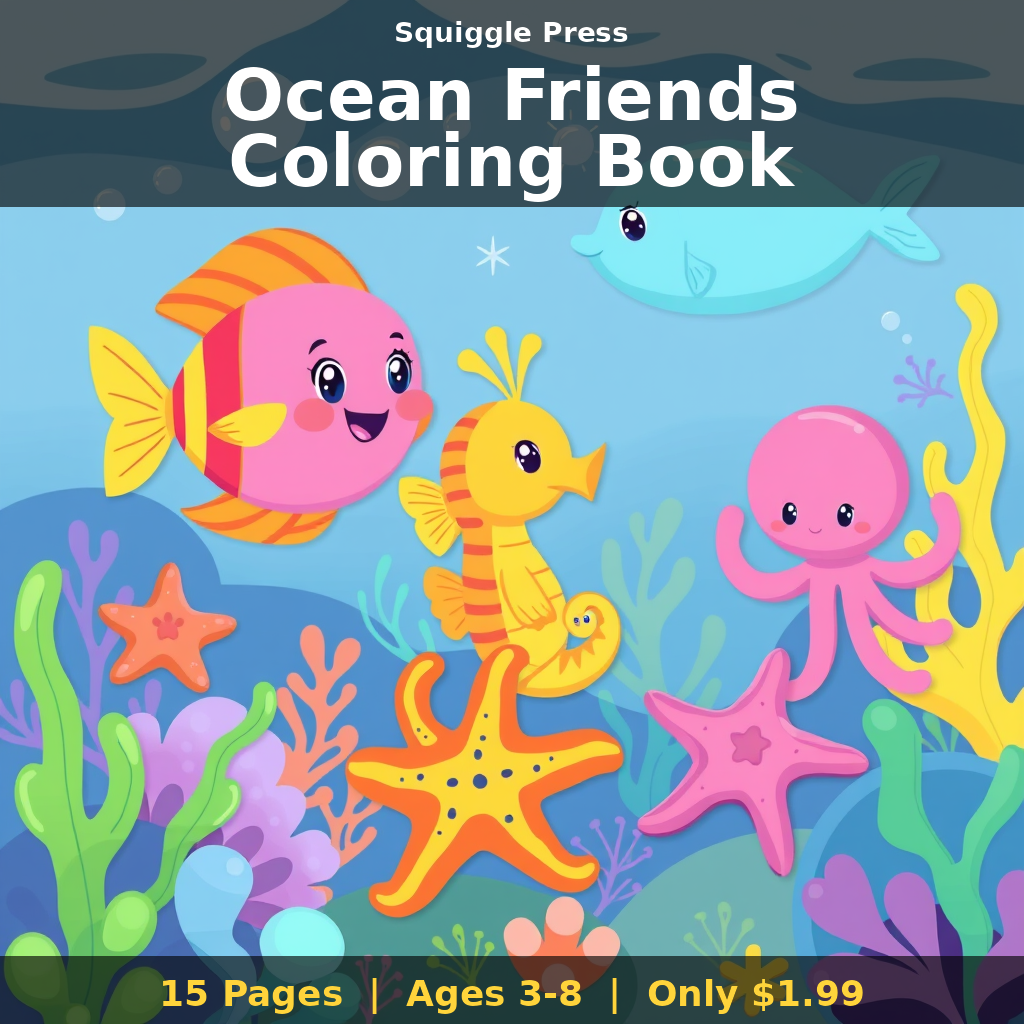
- The Big Book of Coloring ($24.99, printed, coil-bound) — 78 simple pictures, printed on one side only so chunky crayon marks (and the occasional washable-marker mishap) never bleed through to the next page.
- Dinosaur Coloring Book ($16.99, printed, coil-bound) — big, bold shapes that are perfect for jumbo crayon strokes.
- The Everything Bundle ($9.99, instant PDF) — 40 printable books, handy if you want lots of variety to print at home while your toddler is still testing crayon brands.
Browse the full lineup any time at our shop — everything is coil-bound and printed one-sided for exactly this reason.
Tips for making toddler crayon time easier (on everyone)
A few small habits go a long way toward happy, mess-contained coloring sessions:
- Set a “crayon spot.” A specific table or tray signals that crayons stay there, not on the walls.
- Offer a small selection. Four or five crayons at a time is less overwhelming than dumping the whole box out.
- Use a smock or old t-shirt. Washable crayons are forgiving, but prevention beats laundry.
- Praise the process, not the picture. Toddlers are building hand strength and confidence — scribbles are a win.
- Store crayons somewhere toddler-accessible but tidy. A small bin keeps things from scattering under the couch.
If storage chaos is already a problem at your house, our guide to art supply storage for kids has some easy, low-cost ideas that scale up as your toddler’s collection grows.
When to size up from the best crayons for toddlers to something new
Most kids outgrow chunky toddler crayons somewhere between ages 3 and 5, once their pincer grip is reliable and they start wanting more precise lines or more colors. Signs it’s time to size down the crayon barrel (or introduce washable markers and colored pencils) include: holding the crayon like a pencil instead of a fist, asking for “thinner” colors, or getting frustrated that a jumbo crayon can’t make small details. There’s no rush — some kids happily use chunky crayons well into kindergarten, and that’s completely normal too.
The CDC’s developmental milestones page is a helpful, judgment-free reference if you’re ever curious whether your toddler’s grip and scribbling are tracking typically for their age.
A quick safety note on the best crayons for toddlers
Even the best crayons for toddlers aren’t a substitute for supervision. Standard crayons are considered a low choking hazard in the US because of size, but broken pieces, caps from twistable crayons, and small novelty crayon shapes (stars, shapes, etc.) can still pose a risk for kids under 3. Always check the manufacturer’s recommended age range on the box, and do a quick visual check for a safety certification seal before your toddler’s first coloring session.
- Choose jumbo or triangular shapes over standard thin crayons for kids under 3.
- Avoid novelty-shaped crayons with small detachable parts for the youngest toddlers.
- Supervise coloring time, especially early on, the same way you’d supervise snack time.
- Store crayons out of reach between sessions if your toddler still mouths objects.
Looking for something to take along in the diaper bag or car? Our post on travel coloring supplies covers compact, mess-contained options that pair nicely with a small set of washable crayons.
Final thoughts on choosing the best crayons for toddlers
You don’t need the biggest box or the trendiest brand — you need crayons that fit a toddler’s hand, wash off most surfaces, and won’t cause a panic if they end up in a mouth for a second. Start small: one chunky, washable, non-toxic set and a simple coloring book with big, bold shapes to color. That’s genuinely the whole formula. Everything else — more colors, thinner crayons, fancier techniques — comes later, once the fun habit is already built.
best crayons for toddlers — FAQ
What are the best crayons for toddlers who still put things in their mouths?
Beeswax or soy-based crayons, like Honeysticks, are a good choice for toddlers who still mouth objects since they use simpler, food-grade ingredients than standard petroleum-wax crayons. Always still supervise and check the age range on the label.
Are jumbo crayons better than regular crayons for toddlers?
Yes, jumbo or triangular crayons are generally better for toddlers because their wider barrels are easier to grip with an immature fist grasp, and they’re too large to easily choke on compared to standard thin crayons.
Do washable crayons really come off walls?
Washable crayons typically wipe off skin and most fabrics easily, but painted walls can sometimes retain a faint mark, especially on textured or matte finishes. A damp cloth or magic eraser usually removes the rest.
At what age should toddlers start using crayons?
Most toddlers can start with chunky, non-toxic crayons around 12-18 months under supervision, once they can sit and hold an object, though actual coloring control develops gradually over the next few years.
Ready to print some fun?
Real coil-bound coloring books printed on one side only, so markers never bleed through, plus instant printable PDFs and free tutorials to try first.

Every Squiggle Press book — 40 printable PDFs for $9.99
Kids coloring books, adult coloring books, drawing tutorials & sticker packs. $160 value. Print unlimited copies forever.
Get the bundle →