
If you’ve heard people swear by coloring book self care but aren’t sure how to make it part of an actual routine, you’re in the right place. After watching dozens of casual colorers stick with the practice for 6+ months, here are the 5 best routines that actually work — plus what to skip when wellness pressure starts feeling like another chore on the list.
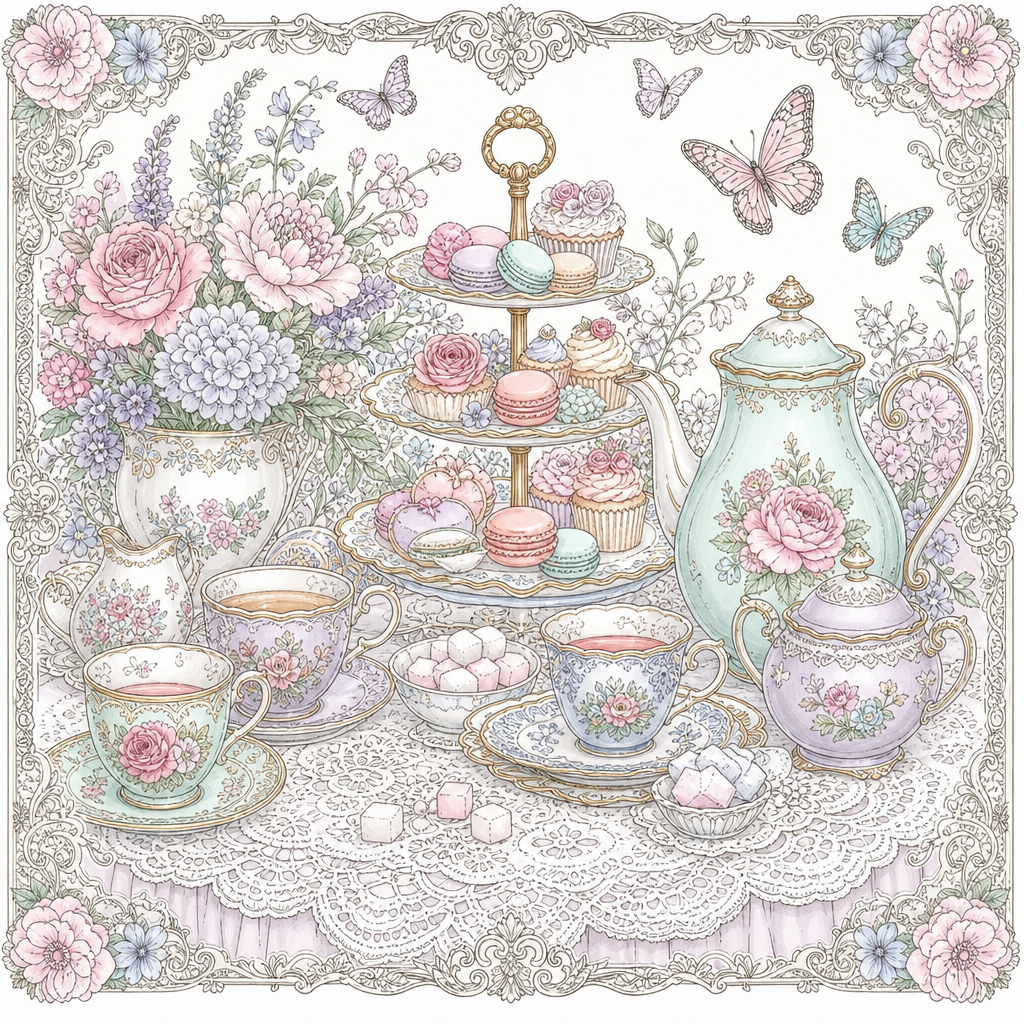
Why coloring book self care actually works
Three mechanisms make this practice more durable than most “wellness” approaches:
- Friction-free start. No app, no signup, no learning curve. Pick up the book, pick up the pencil.
- Visible end product. Unlike meditation, you can see what you did. A finished page is its own reward.
- Adjustable session length. 5 minutes works. 45 minutes works. The practice scales to your day.
The research backs this up. Studies on structured coloring show measurable drops in state anxiety after 20 minutes — see our 30-day anxiety experiment for the practical write-up.
The 5 best coloring book self care routines
1. Evening wind-down (20 minutes, before bed)
The most-popular and best-researched routine. 20 minutes of coloring 30-60 minutes before sleep helps lower nervous-system arousal. Phone goes in another room. Lighting drops to a warm desk lamp. Pages should be soft themes — botanicals, mandalas, cozy scenes — not energetic ones.
Pair with: chamomile or peppermint tea, a comfy chair, slow music or silence. This is the canonical coloring book self care routine because it works with bedtime hygiene rather than against it.
2. Morning slow-start (15 minutes, before phone time)
Underrated routine. 15 minutes of coloring before you check email, social media, or news. The goal: start your day with attention you control rather than attention algorithms hijacked.
Works especially well for high-anxiety mornings. Many users report fewer panicky email-opening moments after a month of this practice. Pair with coffee or tea — the warmth of the routine matters more than the duration.
3. Decompression block (30 minutes, between work and home)
For commuters or work-from-home transitions. Block 30 minutes between “work mode” and “home mode” for coloring. Acts as a buffer so work stress doesn’t carry into evening time with family.
Set a literal timer. The bounded time matters — open-ended coloring becomes work itself. See our stress relief picks for books that work for this style of session.

4. Lunch-break micro-sessions (5-10 minutes)
For people who can’t carve out longer blocks. Five to ten minutes during a lunch break, ideally outside or in a quiet spot. Shorter session, lower threshold for the “I don’t have time” objection.
Honest expectation: micro-sessions don’t produce the same nervous-system shift as 20-minute sessions. But they do produce momentum — and momentum is what builds the habit. After a month of daily micro-sessions, longer sessions feel natural.
5. Weekend deep practice (45-60 minutes, once a week)
The “real artist” routine. One longer session per week — usually weekend morning — where you take on a more detailed page, experiment with new supplies, or finish a specific piece. This complements daily short sessions; doesn’t replace them.
Many regular practitioners find that a weekly deep session gives them the “art identity” feeling short sessions don’t. It’s where you grow as a colorer.
What supplies suit coloring book self care
Forgiveness matters more than quality. The whole point is to lower the stakes.
- Soft-core colored pencils. Forgiving, low-pressure, no mess. A basic 24-set is plenty.
- Water-based markers (Crayola SuperTips style). Won’t bleed through standard coloring book paper. See our markers vs pencils comparison.
- A kneaded eraser. Lifts color without smudging — critical for not feeling like every mistake is permanent.
- Skip alcohol markers, premium pencil sets, and watercolors. Higher-stakes supplies raise the pressure. Save those for active hobby sessions, not self-care.
If you print pages at home, our home printing guide covers settings — printing pages cheaply removes the “wasting a nice page” worry.
Common coloring book self care mistakes
- Treating it like exercise tracking. Daily streaks → stress when you miss a day → quitting. Coloring book self care is supposed to be lighter than that. Miss a day, color tomorrow.
- Picking pages that are too detailed. Hyperdetailed mandalas or tiny floral pages trigger perfectionism. Medium detail is the sweet spot.
- Buying premium supplies you’ll feel bad “wasting.” $80 pencils raise the stakes. $15 pencils are right.
- Letting the routine become rigid. If 20 minutes doesn’t fit one night, 5 minutes is still self-care. Don’t all-or-nothing yourself out of the habit.
- Comparing your coloring to other people’s. Instagram coloring is curated. Yours doesn’t have to be.
How to start a coloring book self care practice this week
Practical 7-day on-ramp:
- Day 1-2: Pick one book and one set of pencils. No browsing for “the perfect” supplies first.
- Day 3-4: Try a 10-15 minute evening session each night. Set a timer.
- Day 5-7: Lock in the routine — same time of day, same chair, same lighting.
- Week 2+: Extend to 20 minutes if it feels good. Skip days without guilt if life intervenes.
The 7-day target is just “build the habit,” not “transform your mental health in a week.” Most practitioners feel real benefits in the 3-6 week range.
Pairing coloring book self care with other practices
Things that compound well with coloring:
- Tea ritual. Heat from the mug, slow sipping, no notifications.
- Lo-fi music or ambient sound. Soft enough not to compete with attention.
- Journaling immediately before or after. 5 minutes of writing complements the visual practice.
- Walking before the session. Short walks ground your nervous system; coloring then maintains the calm.
The Wikipedia overview of art therapy covers the academic framing if you want to read the broader research.
Is a coloring book self care practice “enough”?
Honest answer: it’s a tool, not a cure. If you’re dealing with serious anxiety, depression, or burnout, coloring book self care can be a useful component but won’t replace therapy or medical care. Use it the way you’d use a walking habit — durable, additive, but not a single answer.
For people whose stress is chronic-low-level (most adults), a regular practice meaningfully reduces baseline tension over time. For people in acute crisis, talk to a professional. Both can be true.
FAQ
Do I need to color every day? No. 3-5 sessions per week is plenty. Daily is great if it fits; not required.
Can kids do coloring book self care too? Yes — same mechanisms apply. Keep the framing playful rather than “wellness.” Our adult coloring worth-it analysis covers when this transition makes sense for older kids and teens.
What if I get bored partway through? Stop. Forced coloring is not self-care. Try a different page or come back tomorrow.
Are some pages “better” for self-care? Yes — medium-detail mandalas, soft botanicals, and cozy cottagecore scenes work best. Avoid hyperdetailed work and “dark” themes (skulls, edgy imagery) for self-care specifically.
Bottom line
Coloring book self care works as one of the lower-friction wellness practices available — but only when you set it up with forgiveness baked in. Evening wind-downs, morning slow-starts, and weekend deep sessions are the 5 best routine templates. Use cheap supplies, skip days without guilt, and aim for 3-6 weeks of consistency before judging whether it’s working for you. Most adults who commit that long stick with it for years.

Every Squiggle Press book — 40 printable PDFs for $9.99
Kids coloring books, adult coloring books, drawing tutorials & sticker packs. $160 value. Print unlimited copies forever.
Get the bundle →