
Markers vs colored pencils for coloring books is the question every adult colorer and parent asks within their first three pages. The honest answer is “it depends on your paper and your patience” — but you came here for specifics, so this guide compares the two side by side using six months of testing across cheap and premium options.
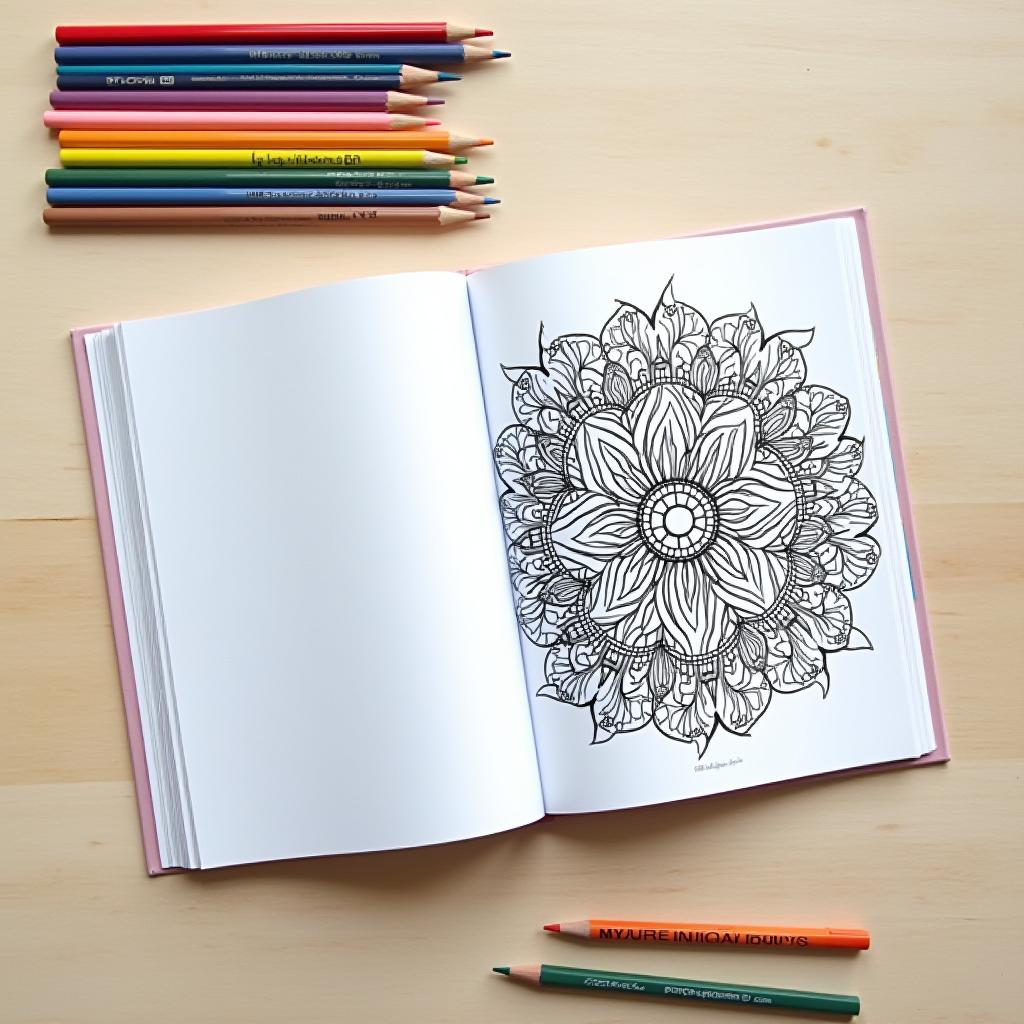
Markers vs colored pencils: the short answer
- Use markers if you want fast, vibrant pages, you’re coloring large open shapes, and your paper is thick (80 lb+) or single-sided.
- Use colored pencils if you love blending, your book has thin paper, you’re coloring small details, or you find the act of coloring relaxing rather than goal-driven.
Now the longer version, because the trade-offs really do matter.
If you’re searching for the best markers vs colored pencils specifically — that’s exactly what this set was built around. The whole reason to pick a markers vs colored pencils over a more generic one is consistency of mood and theme across every page.
Markers: pros and cons
What markers do well
Coverage. A marker lays down rich, even color in seconds. If you’re coloring with a kid who loses interest after eight minutes, that’s a real feature, not a vanity stat. A page that takes 45 minutes with pencils takes 10 with markers.
Brightness. Pigment in markers sits on top of the paper rather than getting buried in fibers. The result looks closer to the printed art on the cover than pencil ever will.
Less hand fatigue. You’re not pressing — you’re gliding. For anyone with arthritis, joint pain, or just an evening that’s already been long, markers are kinder.
Where markers struggle
Bleed-through. This is the big one. On standard 60–70 lb paper (most mass-market coloring books), alcohol-based markers will bleed straight through and ruin the page behind. Water-based markers bleed less but still show. Always slip a piece of cardstock behind the page you’re coloring.
Streaking on big areas. Markers dry fast, which means if you can’t finish a large shape in one pass, you’ll get a visible line where the pigment overlapped a drying edge. This is fixable with technique (color in small overlapping circles, work fast, don’t let an edge dry) but it takes practice.
Blending is harder. You can blend markers — same-brand alcohol markers especially — but it’s a real skill. Most beginners don’t get clean gradients on their first attempt.

They run out. The cheap ones dry up before you finish a thick book. The good ones (Copic, Ohuhu, Arteza) cost real money up front, even if cost-per-page is fine over time.
Colored pencils: pros and cons
What pencils do well
Blending and shading. This is where pencils win, and it’s not close. Layering two or three colors gives you depth that markers physically can’t reproduce. If you’ve ever seen a finished coloring page that looks almost photographic, it was almost certainly pencils.
Detail work. Sharpen the tip and you can color inside a 2 mm petal. Try that with a marker.
No bleed-through. Pencils press dry pigment into paper fibers. Whatever’s on the back of your page is safe, even on the thinnest paper. (See how to print coloring books at home for paper-weight context — this is also why pencils are forgiving on home-printed books.)
Mistakes are fixable-ish. A light layer of color can be lifted with a kneaded eraser or covered with a darker shade. Marker mistakes are forever.
Long lifespan. A box of 24 colored pencils will last most casual colorers a year or more. The core wax-and-pigment composition hasn’t really changed in 80 years, which is why a 1990 set still works.
Where pencils struggle
Time. A page that’s mostly white space takes a long time to fill. If your goal is “finish a page tonight,” pencils may frustrate you.
Hand fatigue. Coloring a large area requires sustained pressure for minutes at a time. Your hand will know.
Sharpener dependence. Detail work needs a sharp tip. Cheap pencils have soft cores that break inside the wood when you sharpen them. Buy a decent sharpener — even a $5 manual one — and don’t skip this.
Color saturation cap. Even with heavy pressure, pencils can’t hit the bright, near-fluorescent saturation that markers can. If you want a pure neon-pink flamingo, pencils won’t get you there.
Markers vs colored pencils: side-by-side situations
| Situation | Better choice |
|---|---|
| Kids under 6 | Washable markers — forgiving, fast, not the end of the world if they color the table. |
| Kids 7–10 learning detail | Colored pencils — they teach control. Pair with our guide on coloring inside the lines. |
| Adults, evening relaxation | Colored pencils. The slowness is the point. See our 30-day adult coloring experiment for why. |
| Mass-market thin-paper book | Pencils. Markers will bleed. |
| Single-sided printable book | Either. Markers are faster; pencils are prettier. |
| Detailed mandala or zentangle | Pencils. Markers can’t fit in the small spaces. |
| Large open shapes (cartoon style) | Markers. Pencils are slow torture here. |
What I actually use (and why)
For my own pages: a basic 36-pencil set (Crayola or generic — honestly the cheap ones are fine for casual use) and one set of dual-tip alcohol markers (Ohuhu’s 40-pack is the entry point most people I know land on).
I reach for pencils maybe 80% of the time because I prefer the meditative pace. Markers come out when I’m coloring with kids or when I want a finished page in one sitting.
The thing nobody tells you: your paper matters more than your medium. A great pencil on bad paper looks worse than a cheap pencil on good paper. If a coloring book is constantly disappointing you, the paper is probably the reason. We compared free and paid coloring books and paper quality was the single biggest difference.
Markers vs colored pencils FAQ
Can I mix markers and pencils on the same page? Yes, and it’s gorgeous. Lay marker first, let it dry fully, then add pencil shading on top for depth. Don’t try the other order — pencil wax repels marker ink.
Do I need expensive markers to start? No. Start cheap. If you find yourself reaching for them every night for a month, then upgrade. Most “I should buy Copics” thoughts go away after two pages.
Why do my pencils look chalky and pale? You’re either pressing too lightly or your pencils have a wax binder that doesn’t load well on textured paper. Press harder, or build up in 3–4 light layers instead of one heavy one.
Are gel pens any good for coloring? They’re great for accents — sparkle, glaze, a pop of opaque white over dark color. Not great as a primary medium for filling shapes.
Bottom line
There’s no universal winner in markers vs colored pencils. Markers are right when you want vibrant, fast pages on good paper. Pencils are right when you want depth, control, and a slower pace. Most adults who stick with coloring end up owning both and switching based on the page.
Pick whichever sounds more like the kind of evening you actually want to have. That’s the only test that matters.
The honest markers vs colored pencils question almost always comes down to your paper, your patience, and what kind of evening you actually want. Below we break the markers vs colored pencils trade-offs down by situation so you can pick once and stop second-guessing.
The honest markers vs colored pencils question almost always comes down to your paper, your patience, and what kind of evening you actually want. Below we break the markers vs colored pencils trade-offs down by situation so you can pick once and stop second-guessing.
Why printables end the markers vs colored pencils debate
With a physical coloring book you commit one page to one medium, forever. With printable pages you can print the same design twice — once on copy paper for pencils, once on cardstock for markers — and let kids compare. Every Squiggle Press book works this way, and the Everything Bundle gives you 49 books’ worth of pages to experiment with.
Keep reading

Every Squiggle Press book — 40 printable PDFs for $9.99
Kids coloring books, adult coloring books, drawing tutorials & sticker packs. $160 value. Print unlimited copies forever.
Get the bundle →