
Some links below are affiliate links. If you buy through them we may earn a small commission at no cost to you.
Parents and teachers searching for drawing tutorials for kids with ADHD usually run into two failure modes: free-form drawing prompts that leave the kid frustrated, or hyper-detailed instruction that loses their attention by step 3. After watching dozens of ADHD-diagnosed kids work through step-by-step drawing content, here are the 5 best drawing tutorials for kids with ADHD formats that actually hold attention — and the ones that don’t.

The best drawing tutorials for kids with ADHD use 4-6 panel step-by-step grids, trace-then-copy formats, themed character series, color-as-you-go structure, or 5-minute time-boxed challenges. These formats work because they break tasks into short, concrete steps with visible progress, matching ADHD attention windows of 5-15 minutes. Avoid open-ended prompts, 15+ minute videos, and realistic-art instruction, which cause decision fatigue and confidence collapse.
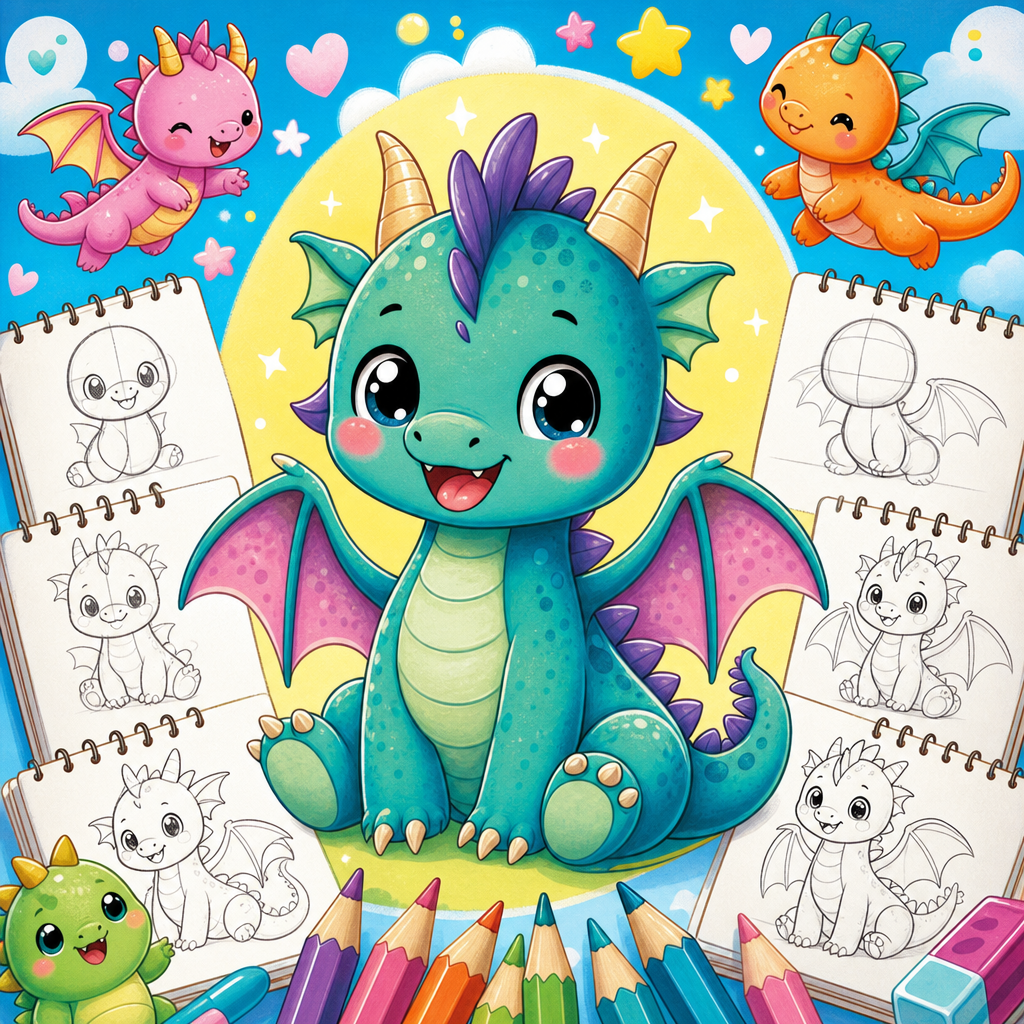
Why drawing tutorials for kids with ADHD need a different format
Three things matter more for ADHD kids than neurotypical kids:
- Clear, short steps. ADHD attention windows are shorter. A 6-step drawing where each step takes 30 seconds works much better than a 3-step “draw a fox” with each step open-ended.
- Concrete output at every step. Each step should produce a visible change on the page. Abstract instructions (“now add personality”) fail.
- Low penalty for mistakes. ADHD kids often quit when frustration spikes. Forgiving line work and clear “ok to redo” framing keeps them engaged.
This is why step-by-step grid tutorials — like the 4-panel “head → ears → details → color” format — work so well. The framework itself is matched to how ADHD brains chunk tasks. Open-ended drawing prompts often fail for the same kids who finish a 6-step printable in 10 minutes.
The 5 best drawing tutorials for kids with ADHD formats
1. 4-6 panel step-by-step grids
The single best format. A printable showing the same subject at 4-6 progressive stages (just the head, head + ears, head + body, full line drawing, fully colored). Kid copies one panel at a time onto blank paper.
Why it works: built-in progress checkpoints, no decision fatigue, clear “you’re halfway done” moment. Attention windows of 5-15 minutes — perfect.
2. Trace-then-copy formats
Provide a faded-line version of the finished drawing on the page. Kid traces over it first, then attempts a freehand copy on the next page. Combines muscle memory + transferable skill in one short session.
Great for kids who give up quickly — the trace step gives an immediate “I drew that” satisfaction, which builds confidence before the freehand attempt.
3. Themed series (same character, multiple poses)
One character (dog, dragon, robot) drawn in 5 different poses across one printable pack. Kid completes one pose per sitting. Builds character familiarity AND keeps each session bite-sized.
Bonus benefit: when the kid does all 5 in the same day, they have a “story” they made — much more rewarding than 5 unrelated drawings. See our adult coloring worth-it analysis for the underlying engagement mechanism (it applies to kids too).
4. Color-by-step instead of complete-then-color
Instead of “draw the whole thing then color it,” structure the tutorial as “draw the head and color the head, then draw the body and color the body.” Each step ends with a finished piece of the drawing.
Why it works for ADHD: dopamine hit from completion happens 5x per session instead of once at the end. Many kids who quit “before the coloring” finish in this format because each segment is its own win. The best drawing tutorials for kids with ADHD lean into this micro-reward structure rather than against it.
5. Time-boxed challenges (5-minute drawings)
Set a visible timer for 5 minutes. Goal: finish a small subject (a flower, simple animal, geometric pattern) before the timer beeps. The artificial constraint makes it a game and matches the attention window precisely.
Critical: the subject must be achievable in 5 minutes at the kid’s skill level. If it’s too hard, the timer becomes a stress trigger. Start with very simple subjects.
Formats that DON’T work for kids with ADHD
Three formats we see fail consistently:
- Open-ended “draw whatever you want” prompts. Decision fatigue → stuck → frustration → quit. ADHD kids do BETTER with constraints, not less of them.
- Hyper-detailed step-by-step videos. Long YouTube tutorials (15+ minutes) lose attention by minute 4. Printables work better because the kid sets the pace.
- “Realistic” drawing tutorials. Skill ceiling too high → first attempts look bad → confidence collapses → quits. Cartoon/stylized art is the right entry point.
Supplies that pair well with drawing tutorials for kids with ADHD
Less is more. Don’t overwhelm with a massive supply box.
- One pencil set (12-24 colors). Triangular grip helps small hands. Soft cores reduce frustration.
- Eraser they can lift, not rub. Kneaded erasers don’t drag marks. Critical for kids who tend to over-erase and tear paper.
- One book or pad at a time. Multiple options paralyze ADHD kids. Pick the day’s printable, put the rest away.
- A visible timer. For time-boxed sessions. Cheap kitchen timer or sand timer beats phone apps (less distraction).
For pairing with coloring practice, see our markers vs colored pencils guide — most ADHD kids do better with pencils than markers (markers are unforgiving and trigger frustration).
Session structure that works
A working 20-minute structure:
- 0-2 min: Show the finished example. “This is what we’re going to make today.”
- 2-12 min: Work through 4-6 steps, one at a time. Kid completes each step before seeing the next.
- 12-18 min: Coloring or detail work. Optional — many ADHD kids stop here.
- 18-20 min: “Show your drawing.” Brief share moment with parent/teacher. End on a high.
Repeat 3-5 times a week if possible. Daily is great; not required.
Why drawing matters for ADHD kids beyond entertainment
Three transferable benefits documented in occupational therapy research:
- Fine motor development. Pencil control transfers directly to handwriting.
- Self-regulation through focus practice. Each completed drawing reinforces “I can finish a thing” identity.
- Visual problem-solving. Step-by-step drawing teaches breaking large tasks into small ones — a core executive-function skill ADHD kids work on.
The art therapy Wikipedia overview covers the broader research on art and self-regulation if you want a deeper read.
Where to find drawing tutorials for kids with ADHD
Three sources that match the formats above. When evaluating drawing tutorials for kids with ADHD specifically, look for the step-grid format first — anything that doesn’t break the task into 4-6 visible panels is the wrong fit.
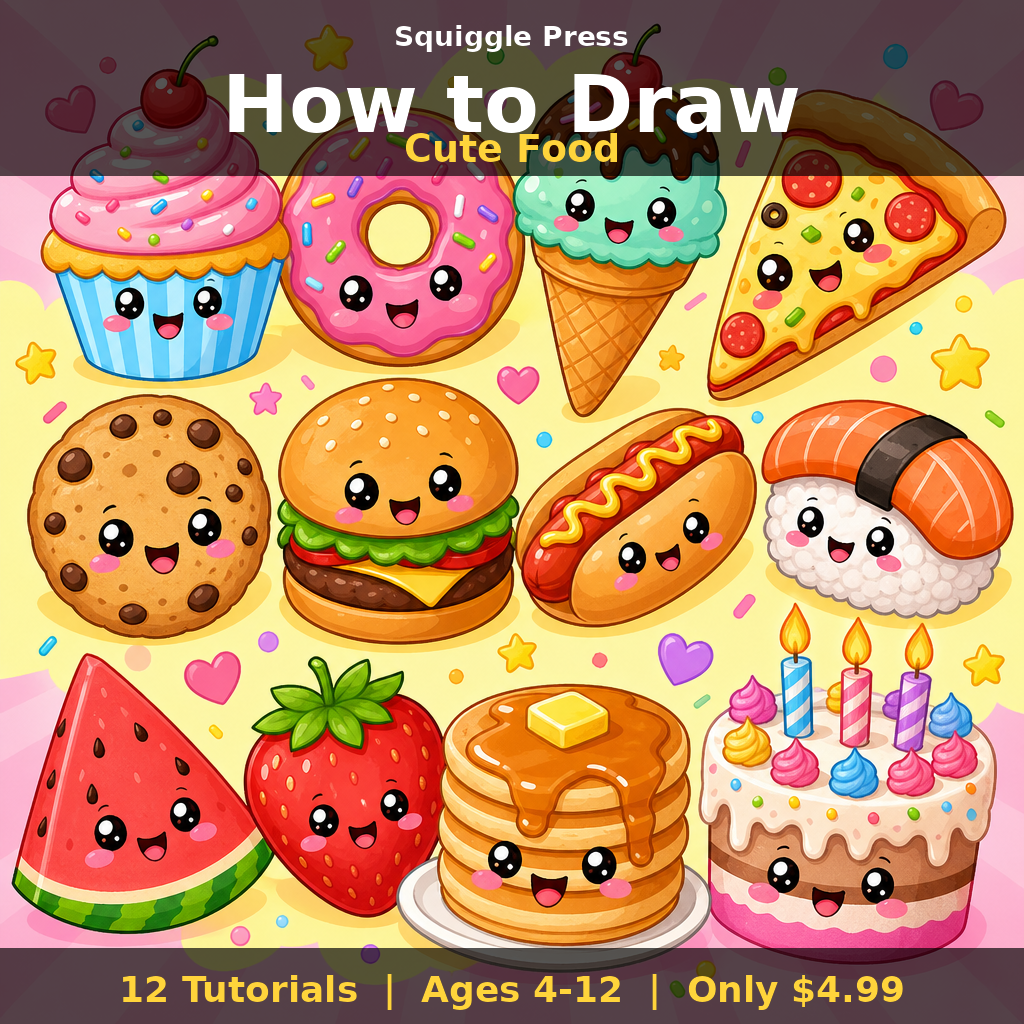
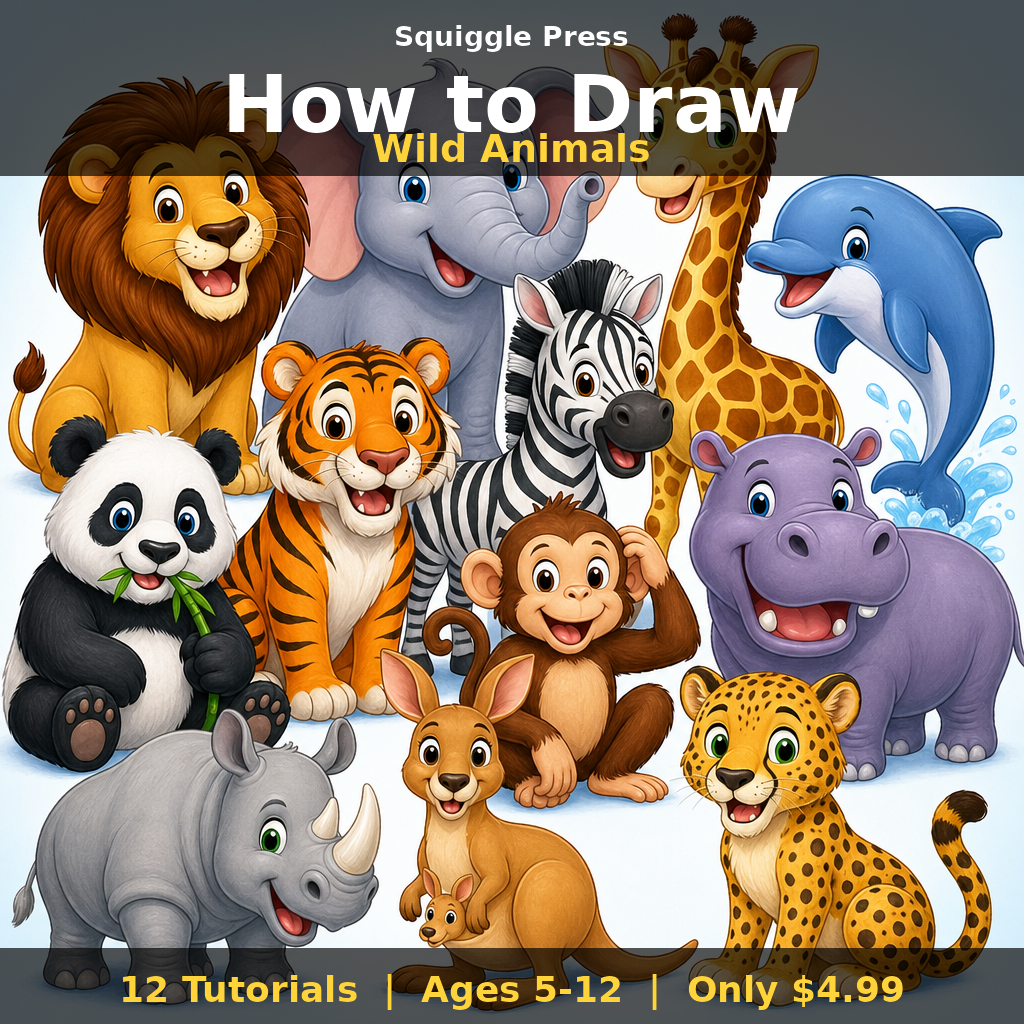
- Squiggle Press printable tutorials. 4-6 step grid format, low-pressure cartoon subjects.
- Art for Kids Hub (YouTube + printables). The YouTube videos run long but the printables are well-structured.
- How to Draw books from your local library. Free, often well-paced. Borrow before buying.
If you print at home, our home printing guide covers settings and our paper guide covers what weight to use (60-70 lb is plenty for kids).
Common mistakes parents make
- Sitting too close and correcting in real-time. Let them finish a step before commenting. Constant correction kills the focus they were building.
- Praising the wrong things. Praise effort and persistence (“you stayed with that for 10 minutes!”), not aesthetic quality.
- Overscheduling. Daily is fine; multiple sessions per day is overkill. ADHD kids burn out on enforced practice.
- Buying massive supply sets too early. A 100-pencil set overwhelms. Start with 24.
- Comparing to neurotypical siblings. Different brains, different paces. The metric is “did they enjoy and try,” not “did they make a picture as good as their sister’s.”
FAQ
Are these tutorials good for kids without ADHD? Yes — they’re well-paced for any age. ADHD-friendly = friendly to most kids.
What age range works best? 6-12 is the sweet spot. Younger kids need larger, simpler shapes. Teens often do better with how-to-draw books than printables.
Should I let them watch tutorial videos instead? Videos work for some kids, but the lack of “your pace” makes them harder for ADHD focus. Printables almost always beat video.
Can drawing replace fidget toys? For some kids, yes — drawing is a “productive fidget.” Others need both. Experiment.
Bottom line
The best drawing tutorials for kids with ADHD use 4-6 panel step-by-step grids, trace-then-copy formats, themed character series, color-as-you-go structure, or time-boxed challenges. Skip open-ended prompts, long videos, and realistic-art instruction at this stage. Pair with simple supplies, a structured 20-minute session, and praise effort over output. Drawing tutorials for kids with ADHD are one of the most rewarding self-regulation practices a kid can build into a weekly routine.
More questions about drawing tutorials for kids with adhd
How long should a drawing session be for a kid with ADHD?
A working structure is about 20 minutes total: 2 minutes showing the finished example, 10 minutes working through 4-6 steps, 6 minutes of optional coloring, and 2 minutes sharing the result.
What supplies work best for ADHD kids learning to draw?
Keep it minimal: one pencil set of 12-24 colors with a triangular grip and soft core, a lift-off (not rub) eraser, one printable at a time, and a simple kitchen or sand timer for time-boxed challenges.
Why do open-ended drawing prompts fail for ADHD kids?
Open-ended prompts like 'draw whatever you want' cause decision fatigue that leads to getting stuck, frustration, and quitting, whereas constrained step-by-step formats give ADHD kids clear direction they respond better to.

Every Squiggle Press book — 40 printable PDFs for $9.99
Kids coloring books, adult coloring books, drawing tutorials & sticker packs. $160 value. Print unlimited copies forever.
Get the bundle →