Looking for coloring pages for mental health support — not just as a hobby, but as a practical tool alongside therapy or self-care? Coloring pages for mental health have grown from a 2015 fad into a research-backed complement for managing anxiety, mild depression, and chronic stress. Here are the 5 best coloring pages for mental health themes, why they work, when to use them, and the honest limits of what coloring can do.

What coloring pages for mental health actually do
Three mechanisms with research support:
- Reduce state anxiety. A 2017 Arts in Psychotherapy study showed measurable drops in moment-to-moment anxiety after 20-minute coloring sessions.
- Increase mindful focus. Coloring’s structured task naturally pulls attention away from rumination.
- Build self-efficacy. Completing a page provides tangible “I did this” reinforcement that depression often blocks.
None of these replace clinical care for serious conditions. But for daily anxiety management, they consistently outperform “go for a walk” advice in adherence and reported benefit.
The 5 best coloring pages for mental health themes
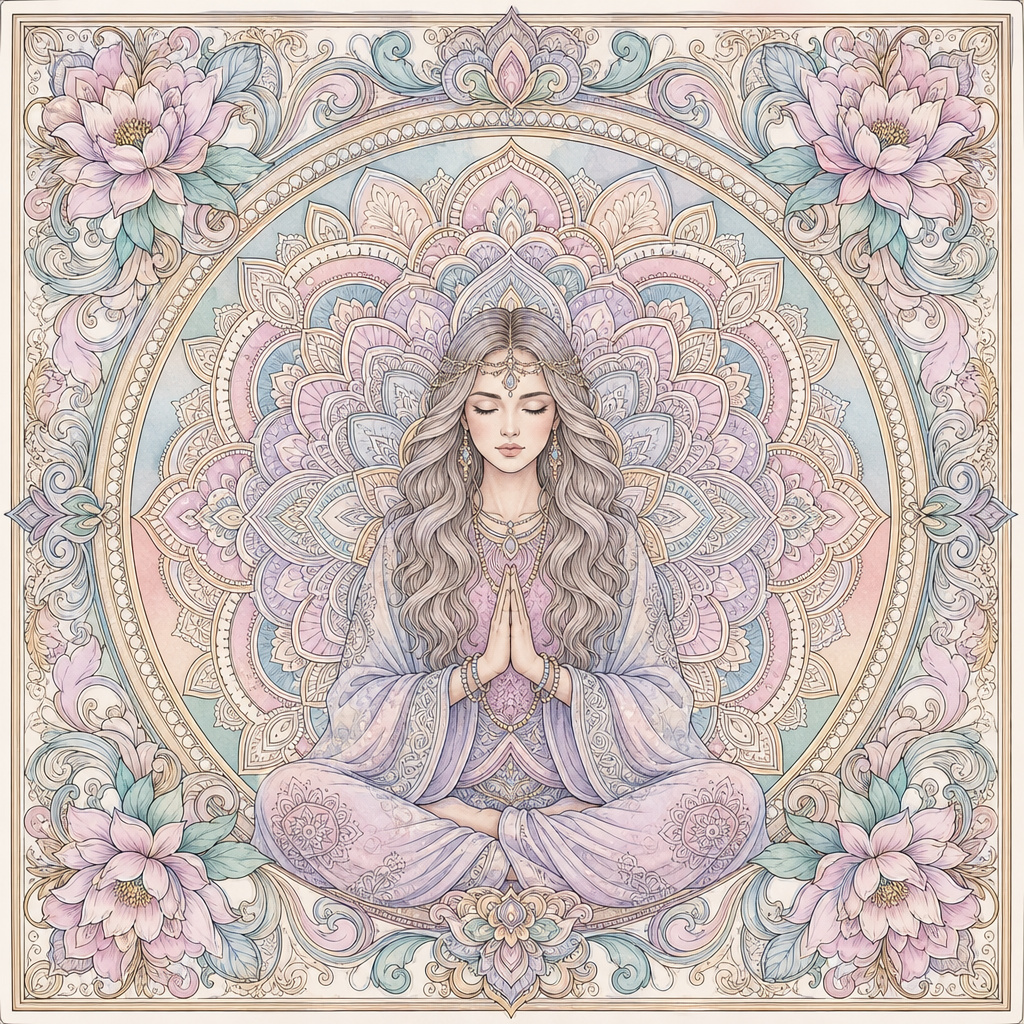
1. Mandalas (most-researched, top pick)
Symmetric mandalas are the most-cited coloring style in clinical research on anxiety reduction. The radial structure + repetitive segments produce the strongest flow state of any genre.
Best for: acute anxiety moments, post-work decompression, before bed. Pick 6-12 ring designs for accessibility. See our mandala printables guide.
2. Botanical and nature themes
Combine the flow benefit with environmental psychology — humans relax around plant imagery in any form. Forgiving line work (natural leaf edges) reduces perfectionism pressure.
Best for: depressive symptoms where motivation is low. The familiar subjects lower the activation energy of starting.
3. Cottagecore / cozy scenes
Cozy homes, teacups, fireside imagery. Triggers emotional safety cues + warm color palette associations.
Best for: loneliness-related distress, seasonal mood drops, evening wind-down. Pair with herbal tea for compounded comfort.

4. Ocean and underwater themes
Wide-open blue compositions, jellyfish, coral, flowing kelp. Visual “underwater” suggestion mirrors deep-breathing patterns associated with calm.
Best for: hot weather stress, racing-thought patterns, anyone who finds water imagery soothing.
5. Sky and celestial themes
Stars, moons, soft cloud scenes, constellations. The “expanded perspective” effect of gazing at night sky, captured in coloring form.
Best for: existential anxiety, before-bed grounding. Pairs especially well with breath work alongside coloring.
When coloring pages for mental health actually help
Three scenarios where research supports meaningful benefit:
- Mild to moderate state anxiety. The “I’m wound up after work” kind. 20-minute sessions reliably reduce.
- Chronic low-grade stress. Regular practice (3-5x/week) shows benefit over 3-4 weeks.
- Adjunct to therapy. Doesn’t replace therapy but complements it — gives clients a self-managed daily practice.
For documentation of personal experience with this curve, see our 30-day anxiety experiment.
When coloring pages for mental health are NOT enough
Honest limits — coloring alone won’t address:
- Major depression. Needs clinical evaluation and treatment.
- Trauma-related symptoms. Needs trauma-informed therapy.
- Severe anxiety with panic attacks. Needs clinical management.
- Suicidal ideation. Crisis support needed — 988 in the US.
- Active eating disorders, OCD, severe PTSD. All need specialized clinical care.
Coloring is a tool, not a cure. The honest framing matters — overpromising “art heals” hurts people who need real care.
How to structure coloring pages for mental health into a daily practice
Five elements that distinguish a practice from a one-off:
- Same time daily. Body learns to expect the calming routine.
- Phone in another room. Notifications break the calm.
- 20-30 minute minimum. Research-supported lower threshold.
- Page chosen in advance. Reduces decision fatigue.
- Comfortable environment. Lighting, seating, sound — all matter.
For session-structure detail, see our stress relief picks.
Supplies that suit coloring pages for mental health practice
Forgiving > premium for mental health applications:
- Soft-core colored pencils. Low pressure, smooth lay-down. See our markers vs pencils guide.
- 24-color set. Avoid 100+ color decision paralysis.
- Kneaded eraser. Lifts mistakes without smearing — reduces perfectionism pressure.
- Quality paper. Cardstock or heavy printer paper. Cheap paper friction undermines flow.
Total starter kit cost: under $25.
What NOT to use for coloring pages for mental health
Four themes that backfire:
- Hyperdetailed adult coloring books. Trigger perfectionism. Save for non-anxious days.
- Dark / horror / skull themes. Visual content matters; dark imagery activates instead of calms.
- Realistic portraits. Wrong-color result causes distress — wrong tool for relaxation.
- Free pages with text-heavy or instructional overlays. Brain reads/processes instead of relaxing.
Combining coloring pages for mental health with other practices
Three combinations that compound benefit:
- Coloring + breath work. Box breathing or 4-7-8 alongside coloring deepens the parasympathetic effect.
- Coloring + journaling. 5 minutes of writing immediately before or after captures emotional processing.
- Coloring + light walking. A short walk before coloring grounds the nervous system; coloring then maintains the calm.
The Wikipedia overview of art therapy covers the clinical adjacent practices — art therapy is what a licensed clinician does; coloring is what you do solo. Different things.
Coloring pages for mental health timeline expectations
| Time | Realistic expectation |
|---|---|
| Single 20-min session | Notable state-anxiety drop |
| Week 1-2 | Coloring becomes a comfort rather than a chore |
| Week 3-4 | Sleep improves; baseline anxiety drops |
| Month 2-3 | Established practice that maintains the benefit |
| Month 6+ | Often becomes part of identity — “I color daily” |
Most people quit before week 3-4, just before the trait-anxiety changes show up. The 30-day commitment matters.
Common mistakes when using coloring pages for mental health
- Expecting it to replace therapy. It’s a complement, not replacement.
- Forcing a “calm” state. Some sessions just happen; pressure defeats the purpose.
- Picking the wrong themes. Dark/edgy art doesn’t help anxiety.
- Quitting after 1-2 weeks. Benefit accumulates — short trials underdeliver.
- Treating it as productivity. No goals, no perfectionism. Just the process.
FAQ
Is coloring as effective as meditation? Similar mechanism, similar magnitude of benefit for many people. Some find coloring more accessible than seated meditation.
Should I tell my therapist about my coloring practice? Yes — useful context for them and may unlock other complementary recommendations.
Are there contraindications? Generally no, but for serious conditions, follow clinical guidance over self-help approaches.
Can kids use coloring pages for mental health? Yes — same mechanisms work for kids. Pair with age-appropriate emotional vocabulary. Schools increasingly use this approach.
What’s the difference between this and art therapy? Art therapy involves a licensed clinician who uses art-making clinically. Coloring is solo, process-focused practice without clinical interpretation.
Bottom line
Coloring pages for mental health work as a complementary tool for anxiety, mild depression, and chronic stress — not as a replacement for clinical care. The 5 best themes: mandalas, botanicals, cottagecore, ocean/water, and celestial. Structure sessions with phone away, 20+ minutes, same time daily. Pair with breath work or journaling for compounded benefit. Expect first-session benefit immediately and durable trait-level changes over 3-4 weeks of consistent practice. Don’t conflate this with art therapy; don’t overpromise it as a cure.

Every Squiggle Press book — 40 printable PDFs for $9.99
Kids coloring books, adult coloring books, drawing tutorials & sticker packs. $160 value. Print unlimited copies forever.
Get the bundle →