If you’ve ever handed a stressed-out kid a coloring page and watched their shoulders drop within minutes, you’ve probably wondered: is this actually doing something, or just a nice distraction? Coloring for anxiety has become such a popular suggestion — from school counselors to therapists to well-meaning grandmas — that it’s worth asking whether the science backs it up. Short version: yes, mostly, and we’re going to walk through exactly why, what the research actually says, and how to get the most calming benefit out of a simple set of pencils and a page.
Yes, coloring for anxiety generally helps — research links it to lower self-reported stress through focused, repetitive attention similar to mindfulness. It works best as a daily coping tool alongside other strategies, not as a stand-alone treatment for clinical anxiety.
The short answer
Coloring for anxiety does help for most people, most of the time — but it’s not magic, and it’s not a replacement for therapy or medical care when anxiety is severe. Research suggests that coloring, especially structured patterns like mandalas, can lower self-reported anxiety and reduce physiological stress markers by giving the brain a repetitive, low-stakes focus point similar to meditation. It works best as one small tool in a bigger toolbox, not a cure-all.
Why coloring for anxiety actually makes sense, psychologically
Anxiety often lives in the “what if” part of the brain — the part constantly scanning for future problems. Coloring pulls attention into the present moment: this color, this line, this tiny section. That’s the same principle behind mindfulness meditation, just with a crayon instead of a breathing app.
A frequently cited 2005 study by psychologist Nancy Curry and colleagues found that coloring geometric patterns reduced anxiety more than free-form drawing or coloring plaid patterns, suggesting structure matters. Later research, including a 2020 study published in the journal Art Therapy, found similar calming effects across both structured and unstructured coloring, especially when people colored for at least 20 minutes without distraction.
The takeaway: coloring for anxiety seems to work through a mix of focused attention, repetitive motion, and a break from screens — three things anxious brains genuinely need.
What the research says (and doesn’t say)
It’s worth being honest here, since we’re not clinicians and this isn’t medical advice. Studies on coloring for anxiety are generally small, short-term, and self-reported, which means results are promising but not the same as, say, decades of research behind cognitive behavioral therapy. The American Academy of Pediatrics has written about the broader value of creative play and art for children’s emotional regulation, noting that unstructured creative time supports coping skills and stress reduction (healthychildren.org).
So what can we confidently say?
- Coloring for anxiety reliably lowers self-reported stress in the short term, in both children and adults.
- It appears to work by engaging focused attention, similar to mindfulness practices.
- It is not proven to treat clinical anxiety disorders on its own.
- It works best combined with other coping strategies, not as a replacement for them.

Coloring for anxiety in kids vs. adults
The mechanism is similar across ages, but the emotional purpose looks a little different depending on who’s holding the crayon.
For kids ages 3-12
Young children often can’t yet name what they’re feeling, let alone talk through it. Coloring gives them something to do with big feelings instead of just sitting with them. It’s also naturally screen-free, which matters — overstimulation from screens can actually feed anxious energy rather than settle it. If you’re picking pages by age, our guide to coloring pages by age can help you match complexity to your child’s developmental stage, since a page that’s too hard can create frustration instead of calm.
For teens and adults
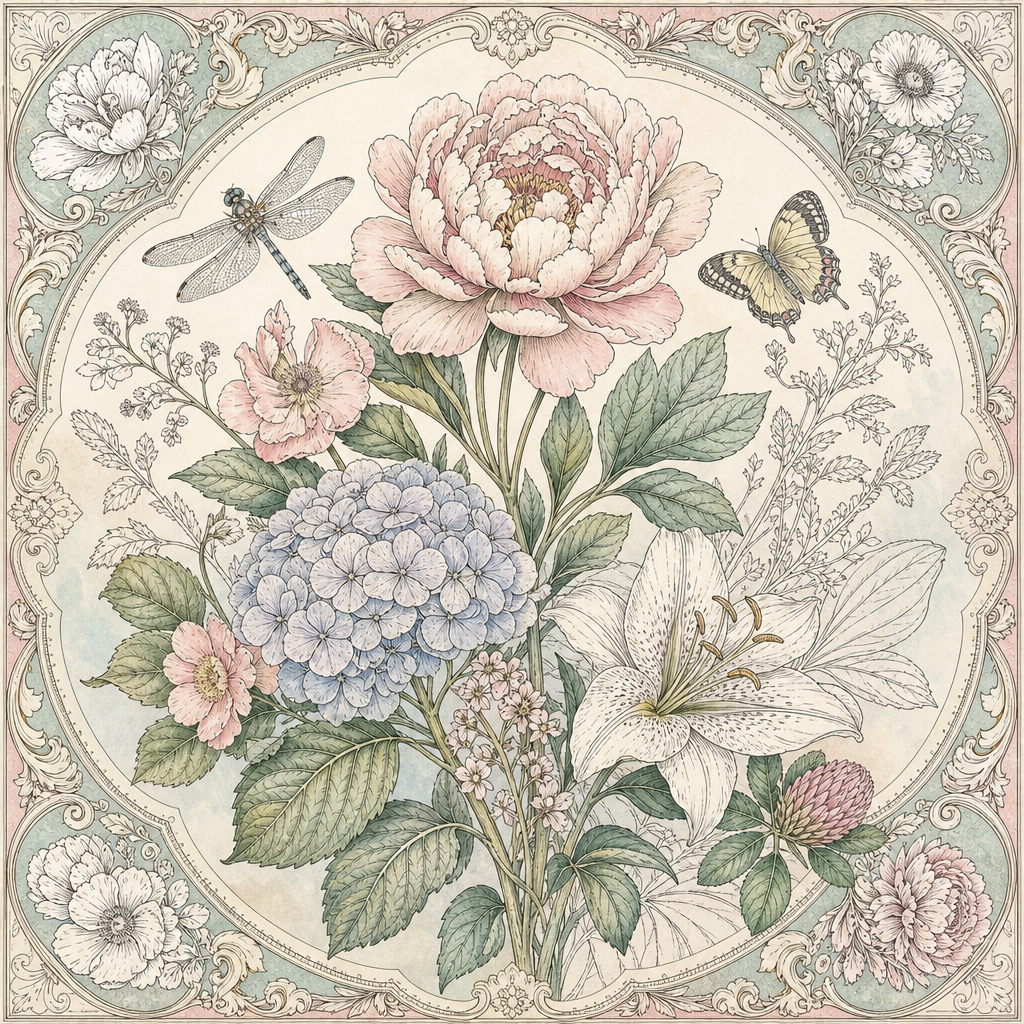
Adult coloring books surged in popularity around 2015 for a reason — many adults found that intricate mandala or botanical designs gave their brains a break from constant multitasking. If you’re new to it, our Mandala Magic Adult Coloring Book (instant PDF download, $1.99) is a gentle place to start, or try the Vintage Botanical Plates Adult Coloring Book for slower, detailed patterns that encourage longer, more meditative sessions.
How to make coloring for anxiety actually work (not just look calm)
Handing over any old page isn’t quite enough. A few small adjustments make coloring for anxiety noticeably more effective, based on what the research on mindful attention and stress reduction tends to point to.
| Do this | Why it helps |
|---|---|
| Choose patterns over blank pages | Structure gives anxious brains a clear, low-pressure task instead of a decision-heavy blank canvas. |
| Set a timer for 15-20 minutes | Matches the duration used in most studies showing measurable calming effects. |
| Remove screens from the room | Notifications pull attention right back into “scanning” mode, undoing the calming focus. |
| Color without a “goal” | Coloring to relax works differently than coloring to finish something perfectly — pressure defeats the purpose. |
| Pair with slow breathing | Combining a physical calming technique with a focused task doubles up on nervous-system benefits. |
Best types of pages for coloring for anxiety
Not every coloring page is created equal when the goal is calm rather than just fun. Here’s what tends to work well:
- Mandalas and geometric repeats — the predictable symmetry is soothing and mirrors meditation research.
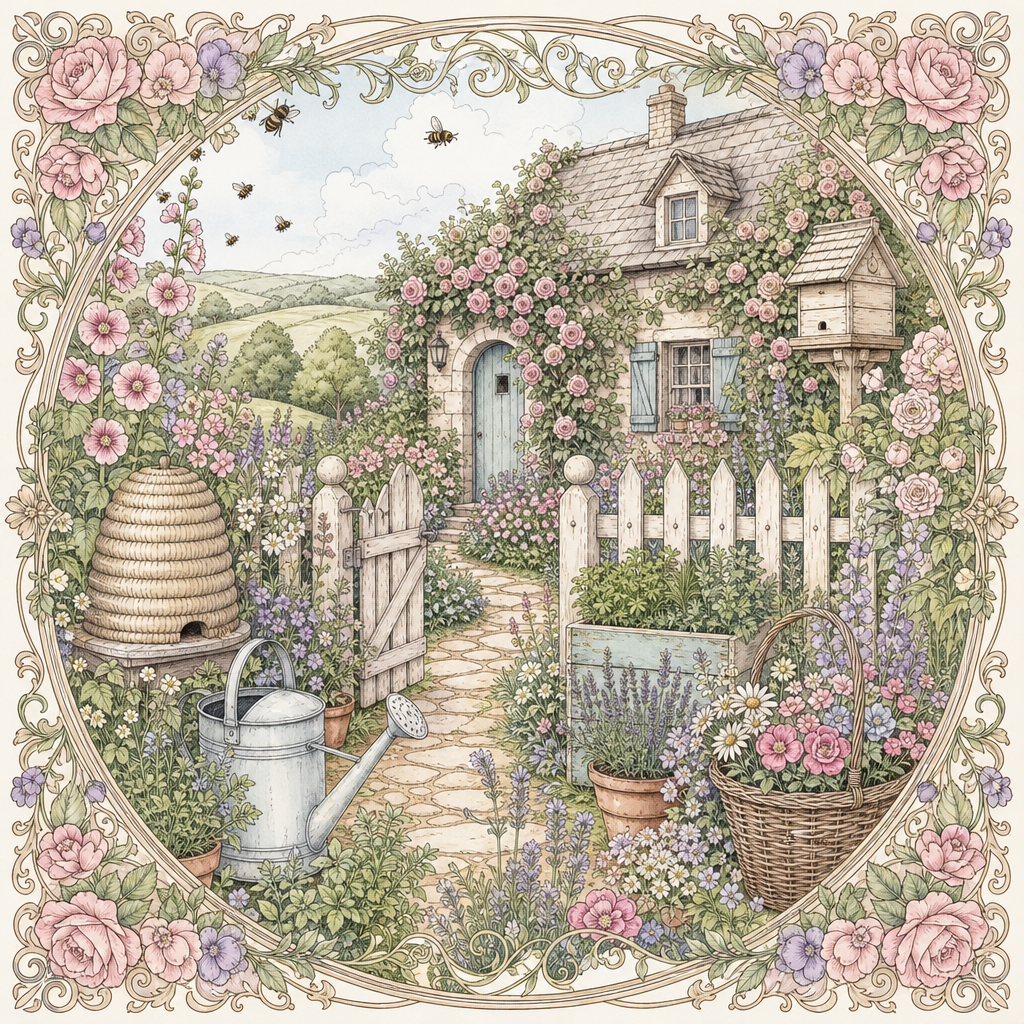
- Nature scenes — florals, gardens, and ocean themes tend to feel gentle and unhurried.
- Simple, larger shapes for younger kids — too much fine detail can frustrate little hands and spike stress instead of lowering it.
- Familiar, low-stakes characters — cute animals or food designs work great for kids who want something playful rather than serious.
For younger children who need bigger, simpler shapes, our Magical Unicorns Coloring Book or Ocean Friends Coloring Book (both instant PDF downloads, $1.99) offer gentle, approachable designs. If you want to try before you buy anything, browse our free coloring pages first — several are calm, low-detail designs perfect for anxious moments.

Building a simple coloring-for-anxiety routine at home
Consistency matters more than intensity. A five-minute coloring break every day tends to help more than one long session a month. Here’s a simple routine families have found useful:
- Keep a small basket of pages and pencils somewhere visible — not tucked away in a closet.
- Offer coloring as a transition tool: after school, before bed, or after a hard moment, rather than only during a meltdown.
- Let your child choose their own page. Autonomy reduces resistance and increases the calming effect.
- Avoid turning it into a critique session — no “that’s not the right color” commentary.
- Notice and name the shift afterward: “You seem calmer now — want to talk about what was bugging you?”
If you print at home, our guide on how to print coloring pages covers paper choices and settings that make pages feel nicer to color on, which sounds small but genuinely affects how relaxing the activity feels.
When coloring for anxiety isn’t enough
We want to be honest here, parent to parent: coloring is a wonderful coping tool, not a treatment. If a child’s anxiety is interfering with sleep, school, friendships, or daily functioning, that’s a sign to loop in a pediatrician, school counselor, or child psychologist. The CDC’s resources on children’s mental health are a good starting point for understanding when anxiety may need more support than a coloring page can offer (cdc.gov/childrensmentalhealth). Coloring for anxiety works beautifully as a daily coping skill, and it can absolutely be part of a bigger support plan — it just shouldn’t be the whole plan on its own.

Other calming creative tools worth trying alongside coloring
Coloring for anxiety pairs nicely with other low-pressure creative activities, especially for kids who get bored with the same coloring book after a while:
- Step-by-step drawing tutorials — following simple steps offers the same focused-attention benefit as coloring, with an extra dose of accomplishment. Our How to Draw Dragons for Kids guide is a fun, low-stress option for kids who like a bit of a challenge.
- Sticker play — placing stickers is repetitive and satisfying in a similar way to coloring, and it’s great for littler kids with shorter attention spans. The Cute Cat Sticker Pack and Kawaii Food Sticker Pack are both instant PDF downloads at $1.99, perfect for a calm-down kit.
- Gel pens for texture-seeking kids — some anxious kids respond well to sensory-rich tools. Our post on gel pen coloring techniques has ideas for adding a soothing, tactile layer to any page.
Rotating tools keeps the activity feeling fresh rather than like one more chore, which matters if you want your child to actually reach for it during a hard moment instead of avoiding it.
A note on adult coloring for anxiety
Parents get anxious too, and modeling calm coping matters. Sitting down with your own coloring page — even for ten minutes after the kids are in bed — sends a quiet message that taking care of your nervous system is normal and worth doing. Many parents find intricate adult designs, like botanical or mandala patterns, more absorbing than simple kid pages, precisely because the extra detail requires more sustained focus, which deepens the calming effect.
If anxiety tends to show up on long car rides or waiting rooms, portable options help. Our road trip activities for kids post includes travel-friendly coloring ideas that double as an on-the-go anxiety tool for the whole family, not just the kids in the back seat.
Frequently misunderstood: coloring is not “just for kids”
One reason coloring for anxiety gets dismissed by skeptics is the assumption it’s a childish activity with no real benefit for grown-ups. But the research doesn’t distinguish much by age — the calming mechanism (focused, repetitive, low-stakes attention) works the same way in a 7-year-old’s brain and a 47-year-old’s brain. If you want reusable options that don’t add to paper waste, check out our guide to reusable coloring pages, which work well for repeated calm-down sessions without printing a new page every time.
The bottom line on coloring for anxiety
Coloring for anxiety is a genuinely useful, low-cost, screen-free coping tool backed by a reasonable (if still growing) body of research. It won’t replace therapy for serious anxiety, but as a daily practice, a calm-down corner staple, or a bedtime wind-down ritual, it holds up. The best approach: pick pages that match the age and mood, keep sessions short and pressure-free, and treat it as one tool among several rather than a fix-all. That’s really the honest, simple answer — and it’s a good one.
coloring for anxiety — FAQ
Does coloring for anxiety actually work, or is it just a distraction?
It’s more than distraction — studies suggest coloring engages focused attention similar to mindfulness meditation, which can genuinely lower self-reported stress, especially with structured patterns like mandalas.
How long should you color to reduce anxiety?
Most studies showing a calming effect used sessions of about 15-20 minutes. Shorter bursts can still help, but longer, uninterrupted sessions tend to produce a stronger sense of calm.
Is coloring for anxiety good for kids or only adults?
Both. Children benefit from coloring as a screen-free way to process big feelings, while adults often find intricate designs particularly absorbing and calming after a stressful day.
Can coloring replace therapy for anxiety?
No. Coloring is a helpful coping tool, but it isn’t a proven treatment for clinical anxiety disorders. If anxiety affects daily functioning, a pediatrician or mental health professional should be involved.
Ready to print some fun?
Browse our printable coloring books, drawing tutorials & sticker packs — instant PDF downloads from $1.99, plus totally free tutorials to try first.

Every Squiggle Press book — 40 printable PDFs for $9.99
Kids coloring books, adult coloring books, drawing tutorials & sticker packs. $160 value. Print unlimited copies forever.
Get the bundle →