
If you’ve ever handed a three-year-old a page covered in tiny mandala swirls and watched them dissolve into frustration, you already know: not all coloring pages are created equal. Matching coloring pages by age and skill level isn’t about being fussy — it’s the difference between a kid who feels proud of their work and one who gives up in two minutes flat. This guide breaks down exactly what to look for at every stage, from wobbly toddler scribbles to detailed adult designs, so you can pick the right page every single time, without a bunch of guesswork or wasted printer paper.
The short answer on coloring pages by age
Here’s the quick version: toddlers (ages 2-3) need thick outlines and huge open spaces. Preschoolers (4-5) can handle simple shapes with a bit more detail. Early elementary kids (6-8) are ready for medium complexity with smaller sections. Tweens (9-12) can tackle intricate scenes and fine detail work. Teens and adults thrive with mandalas, botanicals, and dense patterns. Choosing coloring pages by age correctly builds confidence, keeps kids engaged longer, and makes the whole activity way more fun for everyone involved.
This isn’t a rigid science — every kid develops at their own pace. But having a general framework saves you from the two most common problems parents run into: pages that are so simple they’re boring in ninety seconds, and pages so detailed they end up crumpled in frustration before the first color even gets picked.
Why coloring pages by age actually matters
It’s tempting to think “a coloring page is a coloring page,” but fine motor skills develop on a pretty predictable timeline. According to the CDC’s developmental milestones, kids gradually gain the hand control needed for smaller, more precise movements between ages 3 and 8 (cdc.gov). Handing a child a page that’s developmentally out of reach can lead to frustration, while a page that’s too simple gets boring fast. Sorting coloring pages by age just takes the guesswork out of it.
There’s also a confidence piece here. When a child successfully colors inside the lines — even loosely — they feel capable. That small win adds up over time and can make kids more willing to try harder tasks later, whether that’s coloring or something else entirely, like tying shoes or writing letters.
Think of difficulty level the same way you’d think about book reading levels. Nobody hands a first grader a chapter book meant for a fifth grader and expects a smooth experience. Coloring pages work the same way — matching the challenge to the child’s current stage keeps the activity feeling like play instead of a test they can fail.
Toddlers (ages 2-3): thick lines, big spaces
At this age, grip strength and hand-eye coordination are still very new. Toddlers typically hold crayons in a fisted grip and make broad, sweeping motions rather than controlled strokes. The best pages for this stage have:
- Very thick, bold outlines (think 4-6pt lines minimum)
- Large, simple shapes — a single balloon, a big sun, one animal
- Almost no interior detail
- Plenty of white space so scribbling “outside the lines” still looks fine
Don’t expect neatness. The goal at this stage is just building the habit of holding a crayon and making marks on purpose. If you want to try before committing to anything, our free coloring pages library has several toddler-friendly options worth printing first.
One tip that saves a lot of frustration: tape the page down. Toddlers often push hard enough that a loose sheet slides around the table, which can turn a fun few minutes into a minor meltdown before the crayon even touches paper.
Preschoolers (ages 4-5): simple shapes, a little more detail
By four or five, most kids have moved into a more mature pencil grip and can color with intention, staying roughly within lines on simple shapes. This is the sweet spot for:
- Medium-thick outlines with a bit more structure
- Familiar subjects — animals, vehicles, fruit, simple faces
- A handful of distinct sections rather than one giant blob
- Themes tied to what they already love, since interest drives focus more than difficulty does
This is also a great age to introduce sticker packs alongside coloring, since stickers require similar (but lower-stakes) fine motor precision. The Cute Cat Sticker Pack (instant PDF download, $1.99) pairs nicely with a coloring session as a “finish line” reward.

Preschoolers are also starting to notice color choices and might get particular about “the sky has to be blue” or “grass is always green.” That’s a completely normal developmental phase, not a sign they’re overly rigid — it actually reflects growing pattern recognition, which is a great sign.
Early elementary (ages 6-8): the coloring pages by age sweet spot
Somewhere between six and eight, kids start really enjoying the challenge of detail. Their hand control has improved enough to color small sections without much frustration, and they start caring about things like color choice and shading direction. Good pages at this stage include:
- Moderate line thickness with defined smaller sections
- Scenes rather than single objects — a beach, a jungle, a birthday party
- Simple patterns like stripes, dots, or scales
- Subject matter tied to hobbies: dinosaurs, unicorns, space, sports
This is honestly the age range where coloring pages by age sorting matters most, because kids in this window vary wildly in skill. A confident seven-year-old might be ready for tween-level pages, while another might still prefer preschool simplicity. Watch your kid, not the label on the page. If they’re breezing through everything, our Magical Unicorns Coloring Book ($1.99, instant PDF download) has 15 pages ranging from simple to moderately detailed, so you can gauge where they land.
A simple test at this age: hand over two pages of noticeably different complexity and see which one they gravitate toward without prompting. Kids are usually pretty honest about what feels achievable versus what feels like a chore, and letting them self-select builds a sense of ownership over the activity.
Tweens (ages 9-12): fine detail and step-by-step drawing
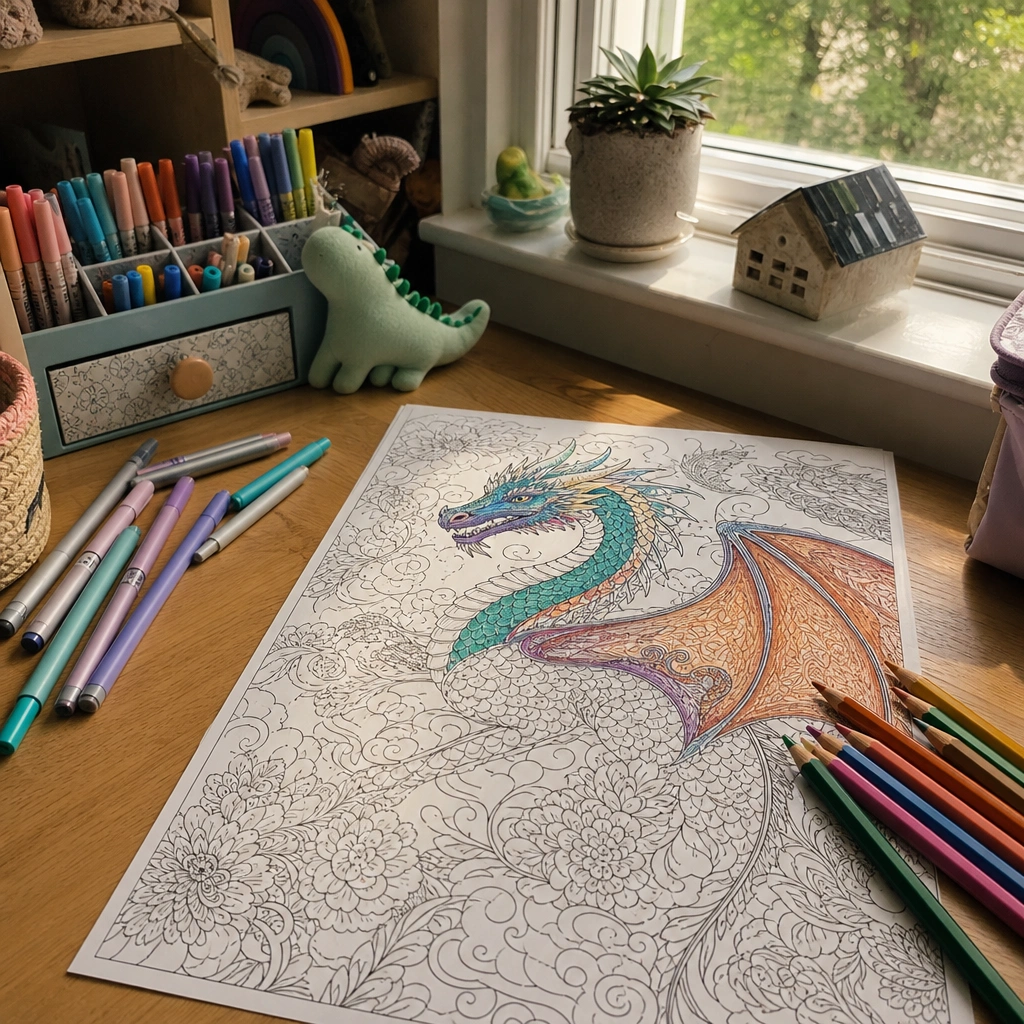
By nine or ten, many kids have the fine motor control of an adult and start wanting more of a challenge, not less. This is where coloring shifts from “fill in the shape” to genuinely artistic, and drawing tutorials become just as appealing as pre-drawn pages. Look for:
- Detailed line art with texture, shading guides, and layered elements
- Step-by-step drawing tutorials that teach technique, not just filling
- Subjects with personal appeal — dragons, mythical creatures, fashion, food
- Coloring tools that support blending, like alcohol markers (we compare options in alcohol markers vs. water-based)
If your kid has moved past basic coloring and wants to learn to draw, How to Draw Dragons for Kids ($1.99, instant PDF download) is a great low-pressure introduction to step-by-step drawing tutorials. It teaches the “start with shapes” method that makes complex subjects feel achievable.
This is also a good age to introduce the idea of “finishing” as optional. Tweens sometimes get stuck feeling like a page has to be perfect or fully complete to count, which can kill motivation fast. Reminding them that a half-colored page is still a real piece of art tends to lower the pressure considerably.
Coloring pages by age: a quick-reference table
| Age Range | Line Thickness | Best Subjects | Detail Level |
|---|---|---|---|
| 2-3 (toddler) | Very thick | Single large shapes | Minimal |
| 4-5 (preschool) | Medium-thick | Animals, vehicles, faces | Low |
| 6-8 (early elementary) | Medium | Scenes, patterns, hobbies | Moderate |
| 9-12 (tween) | Fine | Fantasy, drawing tutorials | High |
| Teens/adults | Fine to very fine | Mandalas, botanicals, abstract | Very high |
Keep this table handy the next time you’re browsing our shop — most product descriptions note the recommended age range, but this chart gives you a sanity check.
Teens and adults: intricate patterns and mindful coloring
Once fine motor skills are fully developed, the appeal of coloring shifts almost entirely toward relaxation and focus rather than skill-building. Adult coloring books lean into dense, repetitive patterns — mandalas, botanicals, geometric designs — because the small, meditative movements are part of the appeal, not a barrier. The American Art Therapy Association has noted that structured creative activities like coloring can support stress reduction and focus, though it’s worth noting this isn’t a substitute for clinical mental health support.
If you’re an adult (or teen) looking to unwind, our Mandala Magic Adult Coloring Book and Vintage Botanical Plates Adult Coloring Book (both $1.99, instant PDF downloads) sit right at that high-detail end of the spectrum. They’re intentionally busier than anything designed for kids — that’s the point.
Many parents find that keeping an adult-level page on hand for themselves turns family coloring time into something everyone actually looks forward to, rather than an activity that’s only for the kids while the adult supervises from the sidelines.
Signs a page is the wrong difficulty (in either direction)
Sometimes the age label on a coloring book isn’t quite right for your specific kid. Watch for these signals:
- Too hard: frequent frustration, coloring only the biggest sections and abandoning the rest, saying “I can’t do this”
- Too easy: finishing in under two minutes, coloring quickly without much care, asking for “something harder”
- Just right: steady focus for 10-20+ minutes, occasional concentration frowns (that’s normal!), pride when showing you the finished page
If you’re constantly seeing “too hard” or “too easy,” it’s worth adjusting up or down a level rather than assuming your kid dislikes coloring altogether. We go into more nuance on this in our related post on choosing coloring pages by age, which covers a few edge cases like kids with fine motor delays or kids who are advanced for their age.
Matching supplies to age, not just the page
Difficulty isn’t only about line complexity — the tools matter too. A toddler with a fine-tip marker is a recipe for frustration (and possibly a marker cap in the mouth). Here’s a rough supply guide by age:
- Toddlers: chunky triangular crayons, washable markers with wide tips
- Preschool-early elementary: standard crayons, colored pencils, broad markers
- Tweens: fine-tip markers, colored pencils, blending pencils
- Teens/adults: alcohol markers, gel pens, fine-liner pens for detail work
The American Academy of Pediatrics offers general guidance on age-appropriate toys and materials, including art supplies, on healthychildren.org, which is worth a browse if you’re building out a craft supply box from scratch.

A quick note on paper, too: thin printer paper bleeds through with markers fast, especially at the tween and adult level where blending is common. A slightly heavier cardstock (or a paper specifically marketed for marker use) makes a noticeable difference and prevents the disappointment of ruining the table underneath.
Building a coloring pages by age library at home
If you’ve got kids spanning several ages (or a mix of kids and grown-ups who all want to color), it helps to keep a small rotating stash rather than one giant coloring book everyone fights over. A few practical tips:
- Sort printed pages into folders by rough difficulty level, not just theme
- Keep a few “easy win” pages on hand for tired-kid days, even if they’ve outgrown them
- Print in batches so you’re not scrambling — our guide to printing coloring pages covers paper weight and settings that hold up to markers
- Reuse pages with wipeable sleeves if you’re printing a lot — see our tips on reusable coloring pages
This approach also makes road trips and long waits at appointments way less stressful, since you can grab age-appropriate pages on the fly. We’ve got more on that in our road trip activities for kids post.
A simple labeled accordion folder — one slot per rough age band — takes about ten minutes to set up and saves you from digging through a messy stack every single time someone asks for a page to color.
Seasonal and themed pages still need age sorting
It’s easy to forget difficulty when you’re excited about a theme. A Halloween page with fifteen tiny pumpkins packed onto one sheet is going to frustrate a five-year-old just as much as a plain mandala would. When you’re browsing seasonal collections like our Thanksgiving coloring pages, Mother’s Day coloring pages, or Halloween coloring pages, keep the same difficulty checklist in mind: line thickness, section size, and overall detail. Theme should never override skill level.
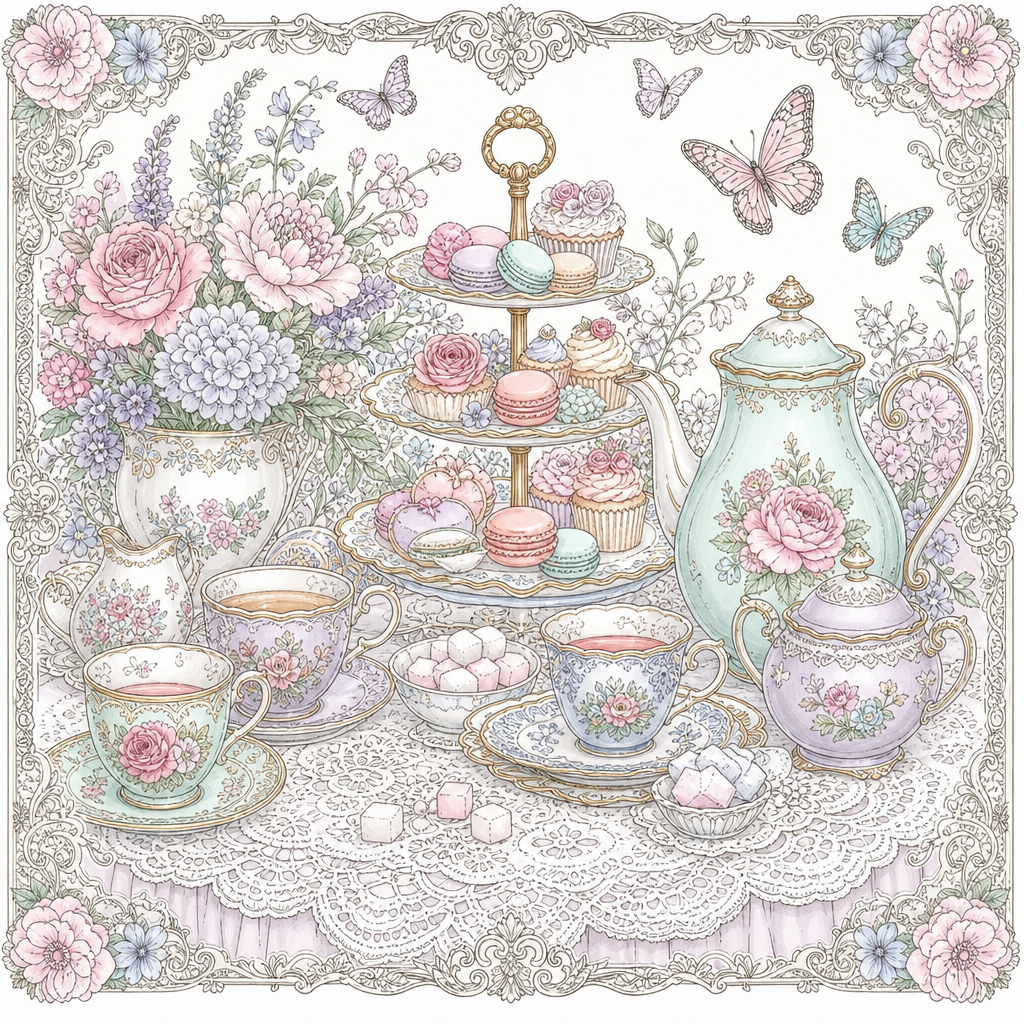
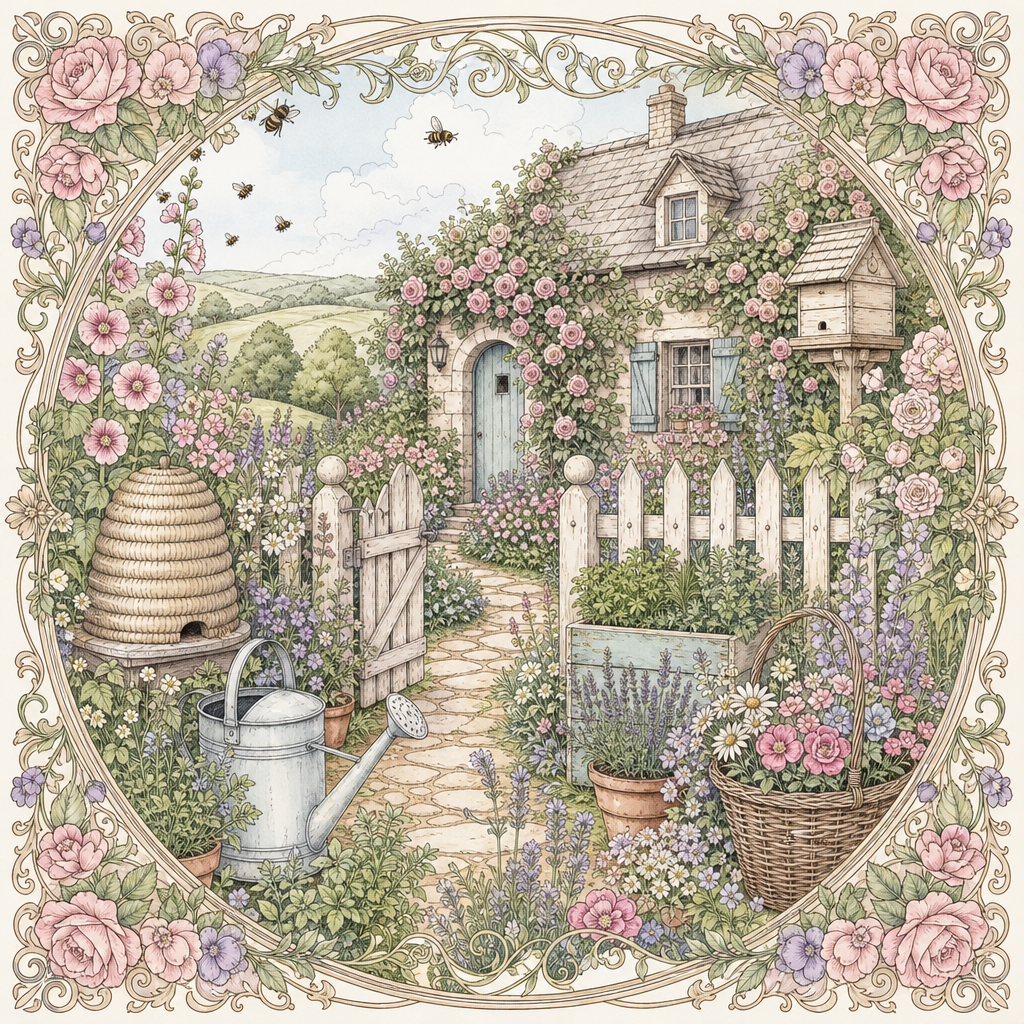
The same goes for aesthetic trends like cottagecore designs — gorgeous, but often detail-heavy. Our cottagecore coloring pages collection tends to suit tweens and up rather than younger kids, purely because of the density of botanical detail.
A few real-world examples across the age spectrum
To make this concrete, here’s how a single theme — ocean animals — might look different across ages. A toddler page might have one big, smiling whale filling the whole sheet. A preschool version might show three simple sea creatures with light background detail. By early elementary, you’d expect a full underwater scene with coral, bubbles, and multiple fish. Our Ocean Friends Coloring Book ($1.99, instant PDF download) actually spans that early-to-mid range nicely within one set.
For tweens wanting to go further with an ocean theme, step-by-step tutorials like How to Draw Cute Sea Animals ($1.99) teach them to create their own detailed sea creatures from scratch rather than just filling in someone else’s lines — a natural next step once basic coloring feels too easy.
Zoom out a little further and you’ll notice the same pattern holds across almost any theme, whether it’s dinosaurs, flowers, vehicles, or holidays: the subject matter can stay constant while the complexity scales up. That’s a handy trick if a kid loves a specific theme and you want to keep offering it as they grow — you don’t have to abandon the theme, just level up the detail.
When to mix difficulty levels on purpose
Not every coloring session needs to match age perfectly. Sometimes an easy page is exactly what a tired tween needs after a long day — low effort, guaranteed satisfaction. And sometimes a motivated five-year-old wants to try “the hard one” just to prove they can. That’s fine. The coloring pages by age framework is a starting point for shopping and printing, not a strict rulebook for every single sitting. Let curiosity and mood guide the day-to-day choices.
What matters more long-term is having a range of difficulty on hand so you’re never stuck offering only one option. A well-stocked printable library — a few toddler pages, a stack of mid-level scenes, a couple of intricate ones for ambitious days — covers almost every mood a kid (or parent) might be in.
A simple, honest checklist before you print anything
If you only remember one thing from this whole guide, make it this short checklist. Before you hit print, ask: Is the outline thickness appropriate for their current grip strength? Are there too many small sections for their patience level right now? Is the subject something they actually care about, since interest often overrides raw difficulty? And finally, do you have a slightly easier backup page ready in case this one turns out to be a miss? Running through these four quick questions takes about fifteen seconds and saves a surprising number of frustrated afternoons.
Quick FAQ on coloring pages by age
- Is there an official age chart for coloring page difficulty? Not an official one, but most printable shops (including ours) label pages by rough age range based on line thickness and detail, which lines up closely with typical fine motor development.
- My kid is “advanced” — should I skip ahead? Sure, as long as they’re not getting frustrated. Watch for the signs listed above rather than sticking rigidly to age labels.
- Do adults need “adult” coloring books specifically? Not strictly, but adult designs are usually denser and more detailed, which many adults find more satisfying and calming than kid-level simplicity.
- What if my toddler wants to color a detailed page? Let them scribble on it if they want — it won’t hurt anything, and it’s still a chance to build crayon control, even if it looks nothing like the original design.
- How often should I update my coloring pages by age library? Roughly every six months to a year for growing kids, since fine motor skills and interests both shift fairly quickly during childhood.
However you sort it, the goal of thinking about coloring pages by age is simple: less frustration, more genuine enjoyment, and pages that actually get finished. Start with our free printables to test the waters, then build up your library from there.
Ready to print some fun?
Browse our printable coloring books, drawing tutorials & sticker packs — instant PDF downloads from $1.99, plus totally free tutorials to try first.

Every Squiggle Press book — 40 printable PDFs for $9.99
Kids coloring books, adult coloring books, drawing tutorials & sticker packs. $160 value. Print unlimited copies forever.
Get the bundle →