
Looking for printable mandala coloring pages that actually print well and don’t pixelate? Mandalas have stayed at the top of the adult-coloring genre for a decade — but free options online range from beautiful to “obviously AI-generated junk.” Here are the 5 best printable mandala coloring pages categories, where to find quality versions, and how to print them at home for clean results.
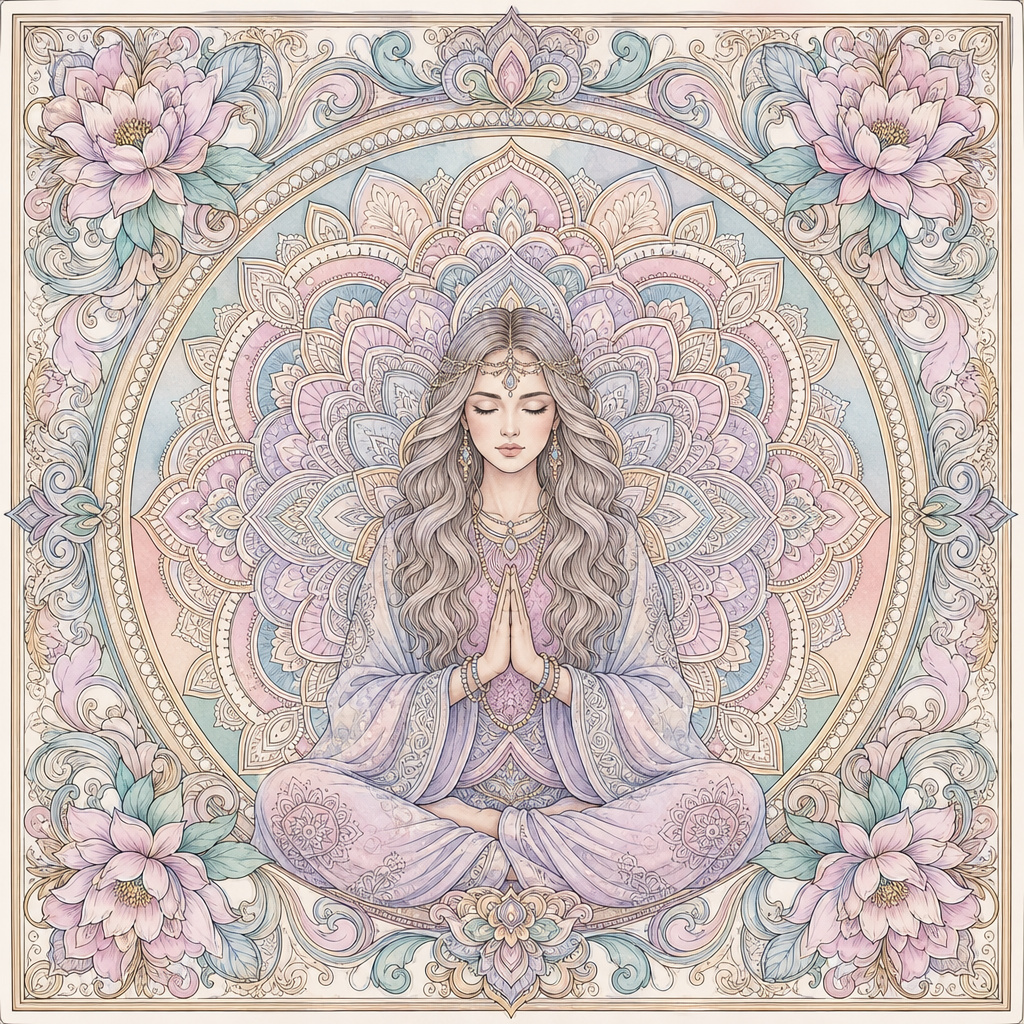
Why printable mandala coloring pages stay popular
Three reasons mandala designs outperform almost every other adult coloring genre:
- Symmetric structure = lower decision fatigue. Color one section, mirror across the design. Your brain doesn’t have to choose where to start.
- AATA-cited stress relief. Studies link 20-minute structured mandala coloring sessions to measurable drops in state anxiety. See our anxiety coloring picks for the research.
- Visually impressive when finished. Even amateur mandala work looks gallery-grade because symmetry hides minor mistakes.
This is why mandala adult coloring books outsold other genres 3:1 during the 2015-2018 coloring boom and have stayed relevant since. Demand is steady, supply varies wildly.
The 5 best printable mandala coloring pages categories
1. Geometric / sacred geometry mandalas
Pure geometric patterns: hexagons, lotus designs, Sri Yantra-style. The most-meditative category. No “objects” embedded — just shapes within shapes.
Why it works: most direct route to the focused-attention state mandala coloring is famous for. Best for advanced colorers, sessions where you want pure flow state, or stress-heavy days.
Skill level: beginner-friendly because shapes are well-defined. Detail level varies.
2. Floral mandalas
Mandalas built around floral motifs: roses, lotuses, sunflowers radiating from the center. Easier color choices because flower colors are familiar.
Why it works: combines mandala’s structure with botanical color guidance. Great for first-time mandala colorers — there’s natural reference for how to color it.
Best for: beginners, gift-friendly framed pieces, anyone overwhelmed by pure geometry.
3. Zentangle mandalas
Mandalas where each segment is filled with different “tangle” patterns (small repeating motifs — dots, lines, waves, leaves). Highly detailed, highly meditative.
Why it works: maximum detail-flow state. Each section is its own tiny project. Sessions can run 60-120 minutes on a single page.
Skill level: intermediate to advanced. Beginners often get overwhelmed by zentangle density.
4. Cultural / cosmic mandalas
Designs drawing from Tibetan, Hindu, or Native American traditions, often incorporating planetary, lunar, or animal symbolism. More artistic, less purely geometric.
Why it works: storytelling element adds emotional engagement to mandala coloring. Some colorers find this more rewarding than pure pattern work.
Be respectful: if you’re coloring traditional designs, knowing their context adds meaning. The Wikipedia overview of mandalas covers the historical and spiritual context.
5. Kids’ simple mandalas
Larger sections, fewer rings, brighter color suggestions. Designed for ages 6-12 to build pattern recognition and fine motor while still benefiting from the structure.
Why it works: introduces kids to the meditative quality of structured coloring without overwhelming them. Often combined with animals or stars for kid-friendly themes.
Free vs paid printable mandala coloring pages
Two camps:
- Free. Available widely. Quality varies — many are AI-generated with subtle distortions. Best free sources: established craft sites like CrayolaTeachers.com, public-domain archives, Squiggle Press promotional pages.
- Paid PDFs. $3-$15 for 15-50 page themed packs. Generally cleaner line art, better resolution, no AI artifacts. Often include bonus content (color suggestions, tips).
For casual single-page use, free is fine. For repeated practice or framing-quality work, paid is usually worth it. See our free vs paid guide for the full quality comparison.
How to print mandala coloring pages well
Three settings that matter most:
- Paper: 60-80 lb cardstock. Mandalas are detailed — thinner paper bends and reduces precision. Our cardstock printing guide covers full setup.
- Quality: Best / High. Detailed lines need crisp output.
- Black ink only / grayscale. Mandala line art is pure black on white. No color ink wasted, sharper output.
If the PDF you bought is high resolution (300+ DPI), your print quality is limited only by your printer. See our home printing guide for printer-specific advice.
Supplies that pair best with printable mandala coloring pages
The mandala-coloring kit:
- Fine-tip pencils or fine-tip markers. Detail work needs precise tools. See our markers vs pencils comparison.
- Color wheel guide. Helps with complementary color decisions. Mandala work rewards thoughtful palette planning.
- Eraser shield. Tiny metal template that lets you erase precision spots without affecting surrounding color.
- Sharpener. Sharp tips matter for fine mandala work. Sharpen every 10-15 minutes.
Skip: thick markers (lose definition), bulky brushes (hard to fit small sections).
Techniques specific to mandala coloring
Three approaches that work:
- Symmetric coloring. Pick one section, color it, then mirror the same color to the corresponding section across the design. Builds the meditative pattern.
- Radial gradients. Use lighter colors in the center, darker toward the edges (or vice versa). Creates depth and visual interest.
- Single palette discipline. Limit yourself to 3-5 colors. The constraint forces meaningful choices and produces more cohesive finished pieces.
Common mistakes with printable mandala coloring pages
- Starting in the middle. Most artists start at the outer ring and work inward. Center-first tends to confuse the color logic.
- Using all colors at once. Mandalas with 30 different colors look chaotic. 5-7 colors is the sweet spot.
- Rushing the detail sections. Mandalas reward patience. A finished page in 90 minutes looks much better than the same page in 30 minutes.
- Picking too-detailed pages for skill level. If you’re new to mandalas, start with 6-8 ring designs, not 20-ring hyperdetailed ones.
- Forgetting the mediation purpose. Some people start treating mandalas like a quality test. The whole point is the process, not the result.
How long does a mandala session take?
| Complexity | Session length |
|---|---|
| Simple (4-6 rings, kid-friendly) | 20-40 minutes |
| Medium (6-10 rings, beginner adult) | 45-90 minutes |
| Detailed (10+ rings, with zentangle) | 2-4 hours |
| Hyperdetailed (20+ rings, full zentangle) | 6-12 hours across multiple sessions |
Realistic session planning: pick a page that matches the time you have. A 4-hour mandala isn’t relaxing if you’re trying to squeeze it into 30 minutes.
FAQ
Are printable mandala coloring pages copyrighted? The line art is copyrighted to the artist. Your finished coloring is your own creative work. Most paid PDFs allow personal use including framing. Resale of art-based products usually requires extended licensing.
Can kids do mandalas? Yes — pick simpler designs (4-6 rings). Builds patience and pattern recognition.
What’s the best paper for mandala work with markers? 100 lb cardstock or marker-friendly paper. Alcohol markers especially need heavy paper.
How do I know if a free mandala is AI-generated junk? Look at the symmetry. AI mandalas often have slightly off-axis details or distorted edges that real designs don’t have. If lines look “almost right but weird,” skip it.
Bottom line
Printable mandala coloring pages remain the gold standard for adult coloring meditation. The 5 best categories: geometric, floral, zentangle, cultural/cosmic, and kid-friendly simple designs. Print on 60-80 lb cardstock, black ink only, best quality settings. Pair with fine-tip tools and a limited 5-7 color palette. Free pages work for casual use; paid PDFs are worth it for repeated practice or framing. Most importantly — slow down. The 90 minutes you spend on a finished page is the point.

Every Squiggle Press book — 40 printable PDFs for $9.99
Kids coloring books, adult coloring books, drawing tutorials & sticker packs. $160 value. Print unlimited copies forever.
Get the bundle →