If you’ve been browsing printables and keep seeing “kawaii coloring pages” labels, you might be wondering what makes a coloring page actually kawaii — and whether it’s just a style trend or something more durable. Here are the 5 best kawaii coloring page themes, what makes art “kawaii” in the first place, why kids and adults both love them, and the age ranges that work best.
What “kawaii” actually means
Kawaii (可愛い) is the Japanese word for “cute,” but in design it’s a specific visual style with consistent rules:
- Round, soft shapes. No sharp angles. Even traditionally “edgy” subjects (sharks, dragons) get rounded.
- Oversized heads relative to bodies. The chibi proportion — head taking up 30-50% of the figure.
- Simple facial features. Big eyes, tiny nose, small mouth, often with a rosy cheek dot.
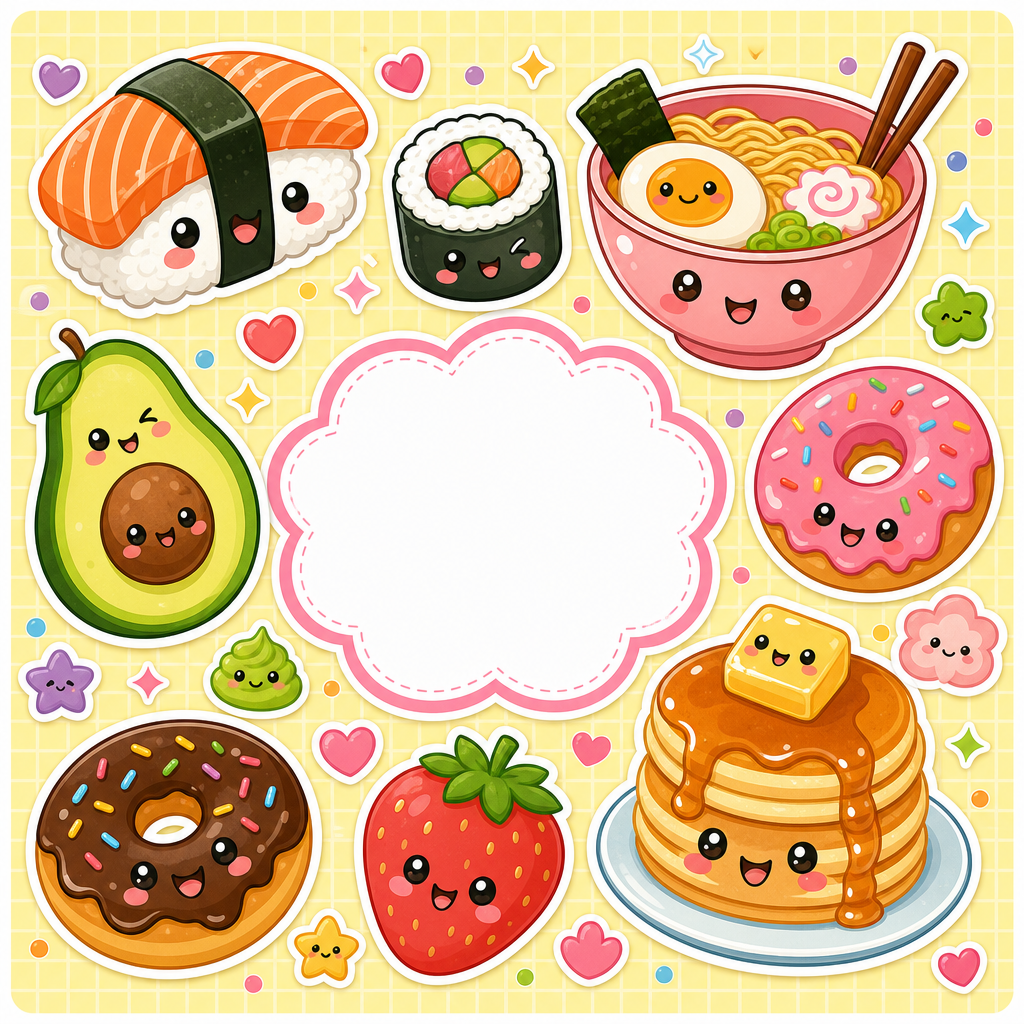
- Friendly faces on inanimate objects. Food, plants, weather — everything gets a smile and eyes.
- Pastel or warm color palettes. Pink, mint, lavender, cream, butter yellow.
This style emerged from 1970s Japanese youth culture and went global with the rise of Sanrio (Hello Kitty) and similar brands. The Wikipedia overview of kawaii traces the history in detail.
The 5 best kawaii coloring pages themes
1. Kawaii food (the gateway theme)
Cupcakes with smiling faces. Ice cream cones with rosy cheeks. Sushi rolls with peaceful expressions. Friendly fruit. This is the most popular kawaii coloring pages category for a reason — food is universally recognized and the cute-anthropomorphic angle makes every shape feel friendly.
Great for: kids 4-10, beginners, party activity pages, classroom use. See our beginner supplies guide for what to use — these pages are forgiving and work with cheap supplies.
2. Kawaii animals
Cats, dogs, pandas, foxes, bunnies, sloths — drawn with chibi proportions and big sparkling eyes. The second most-popular category, and arguably the most adaptable. Friendly cartoon animals with kawaii styling work as gift cards, classroom decor, and decor-quality finished colorings alike.
For adult colorers who want subtle adult-level detail in this category, look for kawaii animals with patterned backgrounds (small repeating hearts, stars, or flowers behind the main character).
3. Kawaii desserts and sweets
Specific sub-genre of food but worth calling out separately. Donuts with sprinkles, layered cakes, milkshakes, ice cream parfaits, parfait swirls. Color choices encourage experimentation — pastel pinks, mint greens, butter yellows. This is the kawaii coloring pages category that most rewards getting creative with palette.
4. Kawaii fantasy (unicorns, mermaids, fairies)
Magical creatures in kawaii style. Smaller, rounder, friendlier than typical fantasy art. Big appeal for kids ages 5-9 who love unicorns and mermaids but find detailed fantasy line work overwhelming.

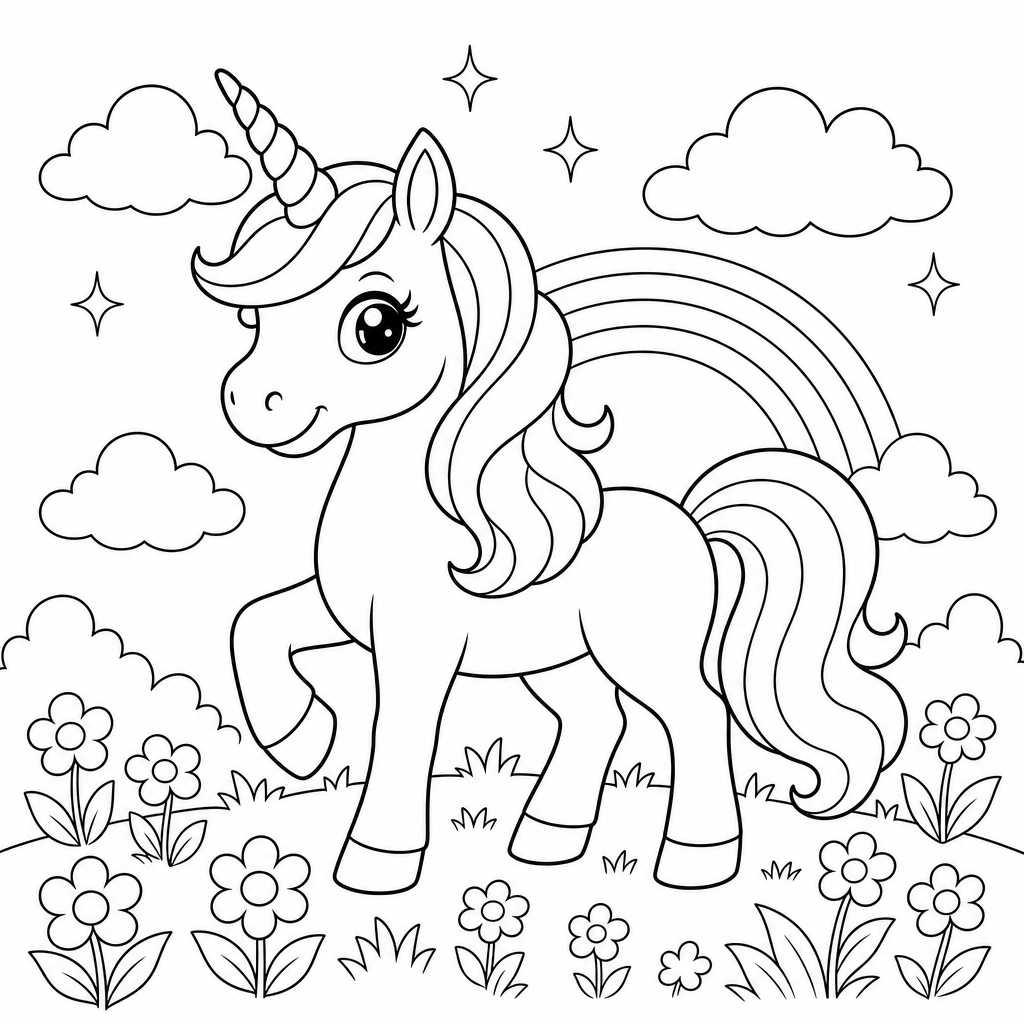
This category pairs well with markers and gel pens — the white-highlight accents that gel pens add really make kawaii fantasy pop.
5. Kawaii daily-life scenes
Cute Japanese-cafe scenes, kawaii classroom items, friendly weather (smiling clouds and suns), kawaii plants and gardens. Less character-focused, more atmospheric. Adult colorers often gravitate here because the pages feel meditative rather than character-heavy.
Why kawaii coloring pages work so well
Three reasons the style outperforms many other coloring genres:
- Friendly faces lower anxiety. Recognizing a “friendly face” triggers warm response. Even adult colorers report lower stress when coloring kawaii compared to detailed botanical or geometric work.
- Forgiving line work. Most kawaii pages have big simple shapes — you can go outside the lines a little without it looking “wrong.” This makes them great for kids and beginners.
- Color flexibility. A kawaii cupcake can be any color combination. The style invites experimentation without “wrong” answers — unlike realistic florals where you might feel you need accurate colors.
This is why so many adult colorers who think they don’t like “cute” coloring books end up enjoying kawaii pages once they try them. See our adult coloring worth-it analysis for how to think about style fit.
Kawaii coloring pages by age range
| Age | Best kawaii themes |
|---|---|
| 3-5 | Simple kawaii animals, smiling food, large simple shapes |
| 6-9 | Kawaii fantasy, sweets, classroom-life scenes |
| 10-13 | Detailed kawaii daily-life, fashion, manga-influenced characters |
| Adults | Kawaii daily-life scenes, kawaii botanical patterns, fashion-inspired kawaii |
Kids in the 6-9 range are the sweet spot — they have enough fine motor for detail but still love the style without irony.
Supplies that work best with kawaii coloring pages
Style choices that complement kawaii:
- Soft-core colored pencils. Lay down soft pastel tones easily. Good fit for kawaii’s color palette.
- Fine-tip water-based markers (Crayola SuperTips). Bright pastels without bleeding through. Our markers vs pencils guide covers when each wins.
- Gel pens (white especially). The signature kawaii “sparkle highlight” comes from a white gel pen dot in the eye.
- Pastel highlighters. Underrated for filling large kawaii shapes quickly with consistent color.
Skip: alcohol markers (the saturation is wrong for soft kawaii palette), oil pastels (too messy for small kawaii faces).
Where to find quality kawaii coloring pages
Three reliable sources:
- Premium PDF packs from indie artists. Etsy and printable shops have the highest quality. $4-$10 for a 15-30 page themed pack.
- Subscription kawaii printable services. Worth it if you go through pages quickly.
- Free promotional pages from brand sites. Quality is more variable here — check resolution before printing. Our free vs paid guide covers what to watch for.
If you print at home, our cardstock printing guide covers settings — kawaii pages work well on 60-100 lb cardstock for marker use.
Common mistakes when buying kawaii coloring pages
- Buying “kawaii” pages that aren’t actually kawaii. Some sellers mis-label cute-but-non-kawaii art. Check for the chibi proportions and friendly-face-on-objects styling specifically.
- Hyperdetailed “kawaii” pages. Some artists pack tiny details into kawaii pages — defeats the purpose of the forgiving style. Look for clean simple shapes.
- Too-busy backgrounds. The kawaii character should be the focus. Backgrounds with hundreds of tiny stars are exhausting to color.
- Adult coloring books labeled kawaii that are really just chibi anime. Different genre — chibi anime can be edgier, more sexualized, or fan-art-derivative. True kawaii stays innocent.
FAQ
Are kawaii coloring pages only for kids? No. The style has a huge adult following, especially among adult coloring book hobbyists looking for low-stress sessions. See our stress relief picks for adult kawaii recommendations.
Can I mix kawaii with other styles? Yes — many adult colorers do kawaii characters with realistic floral backgrounds, or kawaii animals on detailed mandalas. Mixing reduces visual fatigue.
Are kawaii coloring pages always pastel? Default yes, but neon kawaii is also a sub-style. Hot pink, electric blue, lime green — works for “Y2K kawaii” or “decora” aesthetics specifically.
How do I tell if a kawaii page is high-quality? Clean simple line art, consistent line weights, friendly face that actually looks friendly (eyes positioned right, mouth small but visible). Cheap kawaii often has off-center eyes or awkward proportions.
Bottom line
Kawaii coloring pages are one of the most accessible coloring genres — friendly, forgiving, and beloved across age ranges. Food, animals, sweets, fantasy, and daily-life scenes are the strongest themes. Pair with soft pastels (pencils or water-based markers) and add white gel pen highlights for the signature sparkle. Skip “kawaii” pages with hyperdetail or anime-fan-art DNA. Done right, kawaii sessions are some of the most enjoyable coloring sessions in any genre.

Every Squiggle Press book — 40 printable PDFs for $9.99
Kids coloring books, adult coloring books, drawing tutorials & sticker packs. $160 value. Print unlimited copies forever.
Get the bundle →