Looking for the best printable coloring books for seniors? Most “adult” coloring books on the market are designed for sharp eyes and steady hands — small details, hairline outlines, and busy pages that frustrate older colorers. The best printable coloring books for seniors solve those issues with larger print, simpler designs, and dementia-friendly themes. Here are the 5 top picks plus what to look for, what to avoid, and accessibility tips that make every session work better.
What makes the best printable coloring books for seniors different
Four design choices separate genuinely senior-friendly coloring books from “adult” coloring books rebranded:
- Larger shapes. Bigger fillable regions reduce frustration with fine motor changes. Look for designs with shapes 1 inch and up at the smallest.
- Thicker outlines. Bold black outlines (1-2 pt) hide small drift and create high-contrast guides for less sharp vision.
- Familiar imagery. Gardens, vintage scenes, animals, classic flowers — themes that feel inviting and bring positive memory cues, especially helpful for dementia-friendly use.
- Less busy pages. Maybe 40-60% white space instead of fully-packed pages. Easier on the eye, encourages completion.
The American Art Therapy Association notes that simplicity and recognizability matter more than artistic complexity for therapeutic use. See our best coloring books for stress relief writeup for the related research on what calms versus stimulates.
5 best printable coloring books for seniors (categorized)
1. Large-print floral / botanical sets
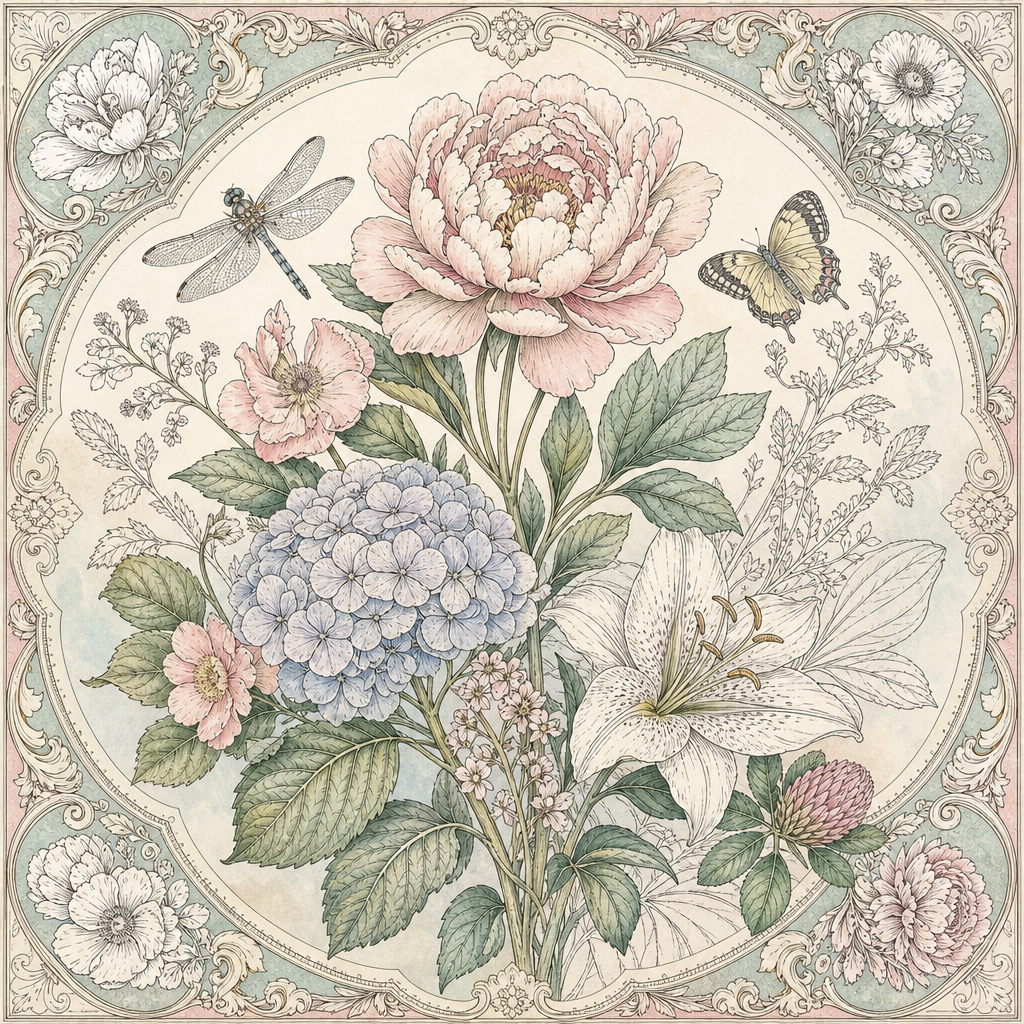
Classic flowers (roses, lilies, sunflowers) drawn with bold outlines and simple petal divisions. Most-loved category in senior centers. Botanicals are familiar, calming, and the natural shape edges hide minor coloring imperfections.
Look for: 6-8 flowers per book minimum, page sizes 8.5×11″, outline weight 1.5pt or heavier. Avoid: fine-detail vintage engravings (beautiful but too detailed).
2. Cozy scenes (cottages, gardens, tea time)
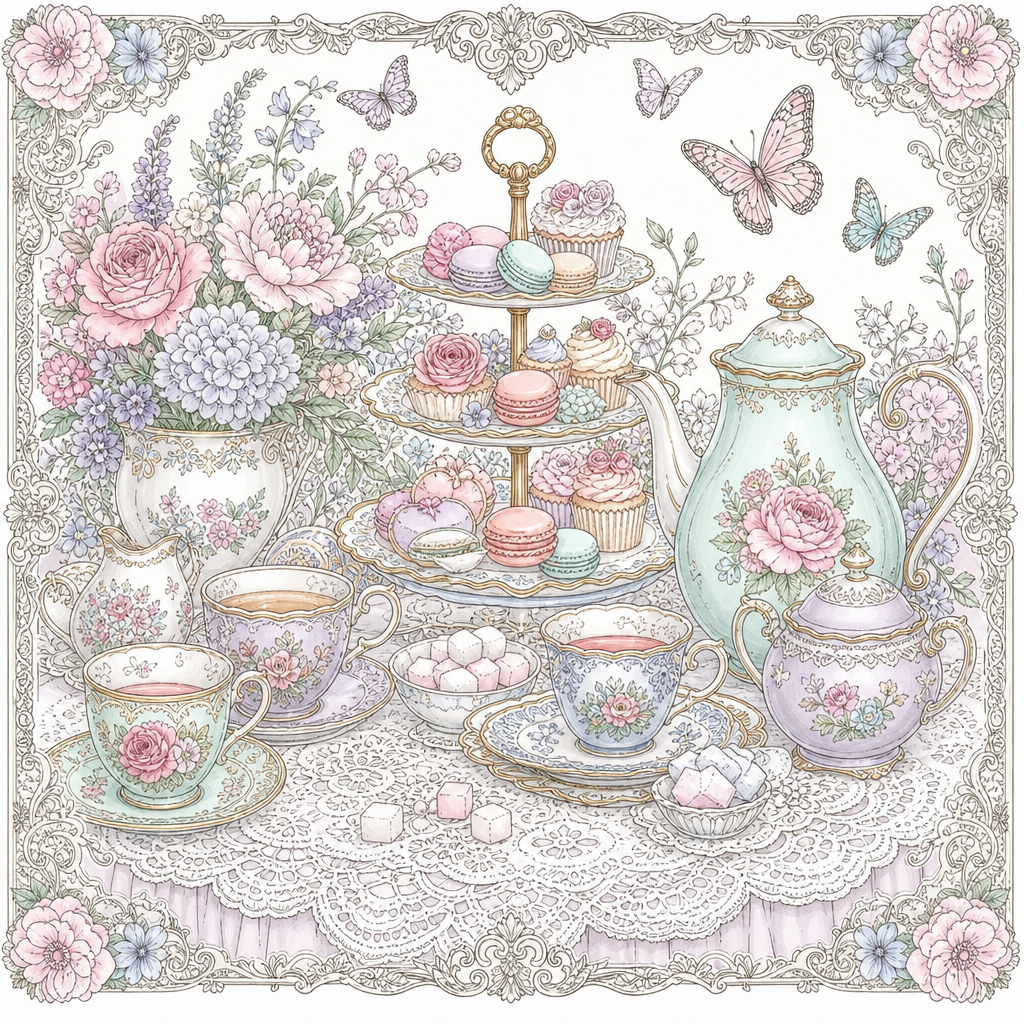
Whimsical-but-simple home scenes. Cottage doors, garden paths, teacups. Strong nostalgic appeal. Often the favorite category in care-facility surveys because they evoke positive memory associations.
This category overlaps with cottagecore — useful when looking for printable downloads online.
3. Classic animals (cats, birds, dogs, farm animals)
Friendly-faced stylized animals. Cats and birds are most popular. The “friendly face” feature triggers warm response. Sized large enough to fill without hand fatigue.
Avoid: hyperrealistic animals with fur detail. The texture lines look stressful to color.

4. Mandalas (low-detail, geometric)
Yes, mandalas — but the simple kind. Look for 8-12-petal designs with bold outline lines and no nested detail in each segment. The repetition is meditative; the simplicity keeps it from being frustrating.
Skip: 100-petal hyperdetailed mandalas. Beautiful, but not what you want for senior accessibility.
5. Memory-cue scenes (vintage, mid-century, seasonal)
Period scenes from the 1940s-60s — kitchens, cars, holidays. Strongly recommended for dementia-friendly use. Familiar imagery from formative years often unlocks engagement when modern subjects don’t.
Sources: dedicated dementia-friendly coloring lines plus mainstream “vintage scene” collections sized large.
What to AVOID in best printable coloring books for seniors
Common traps when shopping:
- Tiny mandalas labeled “for adults.” Frustrating without sharp near vision and steady hand. Save these for a different audience.
- Designs with text labels. “Color the leaves green!” instructions infantilize and reduce dignity. Look for image-only pages.
- Pages without margins. Designs that run edge-to-edge are harder to hold and color. Margins help.
- Cartoon-childish designs. Most seniors find these patronizing. Senior coloring books should feel adult, just accessible.
- Photo-tracing realistic designs. The shading expectations are stressful. Stylized line drawings work better.
Accessibility tips that amplify any senior coloring book
Apart from picking the right book, three small adjustments help a lot:
- Print on cardstock. Heavier paper is easier to hold steady, doesn’t bend awkwardly. See our cardstock printing guide for setup.
- Use triangular grip pencils. Crayola Color Wonder Pip-Squeaks or any “ergonomic” triangular grip helps arthritic hands. Standard round pencils are harder to control with reduced grip strength.
- Provide good lighting. A bright daylight LED desk lamp transforms the experience. Senior eyes typically need 2-3x more light to see well as 30-year-old eyes — a $30 lamp upgrade is one of the highest-impact tweaks.
Best printable coloring books for seniors — by ability level
Three rough tiers:
| Ability level | Best book type |
|---|---|
| Full motor control, just enjoying coloring | Standard adult coloring books, any theme |
| Mild arthritis or vision change | Large-print botanicals, cozy scenes, simple animals |
| Significant mobility/cognitive change | Dementia-friendly memory-cue books, very large shapes, bold outlines |
Don’t force a too-easy book on someone who can handle detail — that’s patronizing. Match the book to actual ability, not chronological age.
Where to find them
Best sources for printable senior coloring pages:
- Squiggle Press and similar printable shops. Single-PDF purchases let you preview before printing.
- Etsy “senior coloring” and “dementia-friendly coloring” listings. Often from caregivers or therapists who know the audience.
- Activities Directors Association printable libraries. Some are free for senior-care settings.
- Public domain coloring sources. The Wikipedia coloring book article links to several archives. Old illustrated children’s book pages from the 1920s-50s are public domain and often perfectly accessible.
For binding loose pages into a usable book, see our DIY book binding guide. Spiral binding works especially well for seniors because pages lie flat.
Pairing supplies with senior-friendly books
The wrong supplies kill even the best printable coloring books for seniors. Quick guide:
- Best pencils for seniors: Triangular-grip soft-core sets. Lyra Color-Giants are great if budget allows ($20-30 for 12). Standard Crayola twistables also work.
- Best markers: Crayola SuperTips fine markers — water-based, won’t bleed through 60+ lb paper, available everywhere.
- Skip: Premium alcohol markers, fine-tip pens, anything that punishes a wobbly hand.
Our markers vs pencils comparison covers when each is better — for seniors, pencils almost always win.
FAQ
What’s the right page size for senior coloring books? 8.5×11″ minimum. Some users do better with 11×14″ for very large shapes.
Are there coloring books for dementia patients specifically? Yes — search “dementia-friendly coloring” for products designed with very large shapes, familiar themes, and minimal complexity per page.
Is digital better than printed? Almost always printed for seniors. Touchscreen coordination is harder than paper for most older users; tablet glare is harder on aging eyes.
How long can a session be? 20-45 minutes is the sweet spot. Beyond that, hand fatigue kicks in. Better to do two short sessions than one long one.
Bottom line
The best printable coloring books for seniors prioritize larger shapes, bolder outlines, familiar imagery, and less-busy pages. Floral, cozy scenes, friendly animals, simple mandalas, and memory-cue vintage scenes are the strongest categories. Pair with ergonomic pencils, cardstock paper, and good lighting for a session that’s enjoyable instead of frustrating. Match the book complexity to actual ability — not the user’s age.

Every Squiggle Press book — 40 printable PDFs for $9.99
Kids coloring books, adult coloring books, drawing tutorials & sticker packs. $160 value. Print unlimited copies forever.
Get the bundle →