Looking for the best coloring pages for toddlers that match small fine-motor skills and short attention spans? Toddlers ages 2-4 need very different coloring pages than older kids — bigger shapes, thicker outlines, familiar subjects, and forgiving complexity. Here are the 5 best coloring pages for toddlers categories, design features to look for, and what supplies actually work at this age.
What makes the best coloring pages for toddlers different
Five design features that matter most:
- Large, simple shapes. 2-inch minimum fillable areas. Toddler hands can’t manage smaller.
- Thick black outlines (2-3 pt). Provides visual fence even when coloring isn’t precise.
- Familiar subjects. Cats, dogs, suns, hearts, simple cars. Avoid abstract or detailed scenes.
- Few elements per page. One subject, maybe 2-3 simple shapes around it. Crowded pages overwhelm.
- Forgiveness for off-page coloring. Margins absorb some out-of-line work.
Standard kid coloring books often fail toddlers because they’re designed for ages 6+. The best coloring pages for toddlers are a different design category entirely.
The 5 best coloring pages for toddlers
1. Simple animal silhouettes
One large animal (cat, dog, bunny, duck) with minimal interior detail. Sometimes just the outline, sometimes with 2-3 basic features (eyes, mouth) inside.
Why it works: toddlers recognize animals immediately. The big single shape is easy to fill. Familiar subject = engaged toddler.
Best for: ages 2-4. Pair with chunky crayons or triangular pencils.
2. Single-shape “color it” pages
One big simple shape: a heart, a star, a circle, a triangle. That’s it. Color the inside, done.
Why it works: pure shape recognition + filling practice. Builds the foundational coloring skill before pages have multiple elements.
Best for: 2-year-olds just learning to hold a crayon. Five minutes of “color the heart” beats 30 minutes of frustrated complex pages.

3. Vehicle pages (cars, trucks, trains)
Toddler favorite. Simple car or truck shapes with big windows, wheels, and minimal detail. Often boys especially gravitate here, but works for any toddler.
Why it works: high engagement with familiar object. Vehicle pages keep toddler attention longer than abstract designs.
4. Holiday-themed simple pages
Big pumpkin for Halloween, basic Christmas tree, simple egg for Easter, big heart for Valentine’s. One large iconic seasonal shape.
Why it works: holiday excitement boosts engagement. The simple shape matches toddler skill while connecting to celebration.
Best for: rotating seasonally. See our adult coloring worth-it analysis for how holiday pages compare across ages.
5. Number and letter coloring pages
Big block letters or numbers — one per page. Toddler colors the letter A on Monday, B on Tuesday, etc.
Why it works: coloring + alphabet/number exposure simultaneously. Educational benefit on top of the activity.
Best for: ages 3-4 who are starting letter recognition. Build into a daily routine.
Supplies that work with the best coloring pages for toddlers
Match supplies to age:
- Ages 2-3: Chunky crayons (Crayola My First or similar), washable markers, finger paint.
- Ages 3-4: Triangular pencils, standard washable markers, dot markers.
- All ages: Washable everything. Toddlers WILL color the table, walls, themselves.
See our best coloring pencils for kids guide for specific pencil picks. For markers vs crayons at this age, crayons usually win — wider grip, more forgiving.
Best coloring pages for toddlers — what to AVOID
Common mistakes when picking pages for toddlers:
- Pages designed for older kids. Detailed scenes, tiny elements, complex coloring books for ages 6+.
- Pages with text or instructions. Toddlers can’t read; instructions add nothing.
- Adult coloring books. Way too complex. Save for ages 8+.
- Tiny pages. Standard 8.5×11″ is the minimum. Mini coloring books frustrate small hands.
- Pages with photos or realistic art. Cartoon style works much better for this age.
Where to find the best coloring pages for toddlers
Three reliable sources:
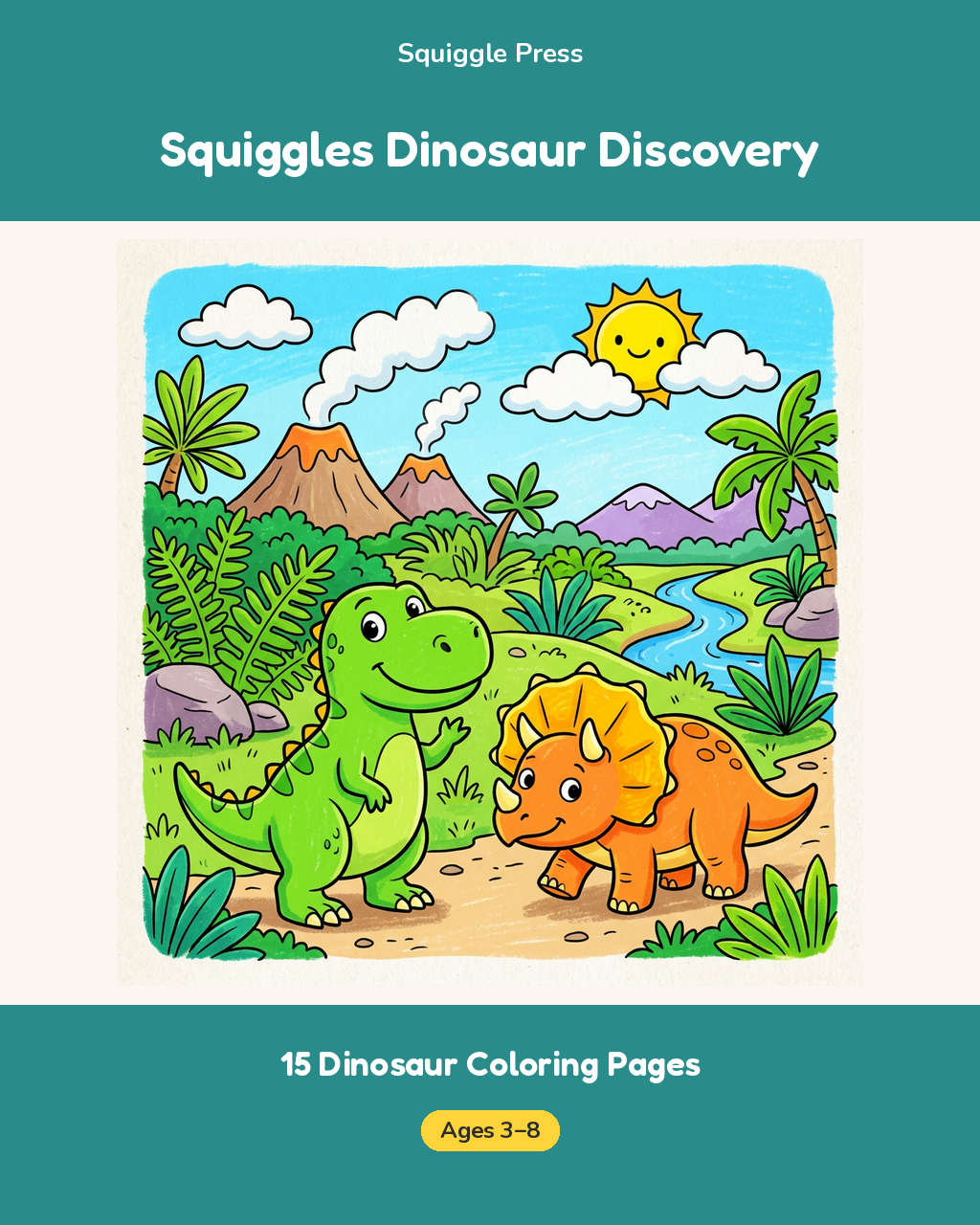
- Toddler-specific printable shops. Etsy, Squiggle Press, and other indie shops have age-targeted packs. $3-8 for 10-20 pages.
- Free preschool/early-learning sites. Education.com, Crayola.com, ABCmouse all have free toddler pages.
- Activity book collections. Big Wider Smarter (60+ pages, $5-10) and similar mass-market toddler activity books.
For printing at home, our home printing guide covers setup. For toddlers, print on standard 20 lb paper — no need for cardstock. They’ll color over the page anyway.
Session length for toddlers
| Age | Realistic session |
|---|---|
| 2 years | 5-10 minutes |
| 3 years | 10-15 minutes |
| 4 years | 15-25 minutes |
Don’t push past attention. A short happy session beats a long frustrated one.
How to make coloring with toddlers actually work
Five practical tips:
- Sit with them. Toddlers do better when an adult colors alongside, not just supervises.
- Don’t correct. Don’t say “stay in the lines” — defeats the purpose at this age. Focus on the joy.
- Praise effort, not result. “You worked so hard on that” beats “what a beautiful butterfly.”
- Display finished work immediately. Fridge, wall, gift to grandparent. Builds the “I made art” identity.
- Quit while they’re enjoying it. Stop before they lose interest. They’ll come back next time.
For the developmental research on this approach, the Wikipedia overview of fine motor skill development covers the relevant milestones.
Common parent mistakes
- Buying detailed coloring books for 2-year-olds. Wastes money and frustrates the kid.
- Expecting “real” art. Toddler coloring is mostly scribbling. That’s developmentally appropriate.
- Adding screen time as alternative. Defeats the point of coloring being screen-free time.
- Using non-washable supplies. Future-you cleaning crayon off walls will regret it.
- Pushing past attention limits. Creates negative association with coloring overall.
FAQ
When should I start coloring with my toddler? 18-24 months for chunky crayon scribbles. Real attempts at coloring shapes by 2-3 years.
Are dot markers worth it? Yes for ages 2-3. Filling circles with dots is satisfying and works around fine-motor limits.
What if my toddler eats the crayons? Most are non-toxic but get a “dough” version that’s larger and harder to break off small bites. Supervise.
How do I help my toddler learn to stay in the lines? Don’t push it. Fine motor develops around age 4-5. Forcing earlier creates frustration.
Should I let my 3-year-old use the same coloring books as my 7-year-old? No — design complexity is too different. Get age-matched pages.
Bottom line
The best coloring pages for toddlers feature large simple shapes (2-inch minimum), thick outlines, familiar subjects, and just one or two elements per page. Match supplies to age — chunky crayons for 2-year-olds, triangular pencils for 3-4-year-olds. Keep sessions short (5-25 min), color alongside them, praise effort over perfection. Skip detailed kid coloring books at this age — wait until 5+ for those.

Every Squiggle Press book — 40 printable PDFs for $9.99
Kids coloring books, adult coloring books, drawing tutorials & sticker packs. $160 value. Print unlimited copies forever.
Get the bundle →